“There’s no El Segundo Blue Butterfly anywhere else in the world. It’s just here in Southern California.”
Sok Pao
CCC Los Angeles Center
Los Angeles International Airport is one of the busiest in the world. Yet, just west of the airport’s four runways, CCC Corpsmembers are focused on a different set of frequent flyers: El Segundo Blue Butterflies.
“We are right next to the airport and the street,” said Los Angeles Corpsmember Sok Pao, “basically in a sand dune, standing on history.”
Fifty years ago, in 1976 – the same year the California Conservation Corps was established – the federal government designated El Segundo Blue Butterflies as the first endangered insect species in the United States, drawing national attention to the area.
Native Plants Bloom Population
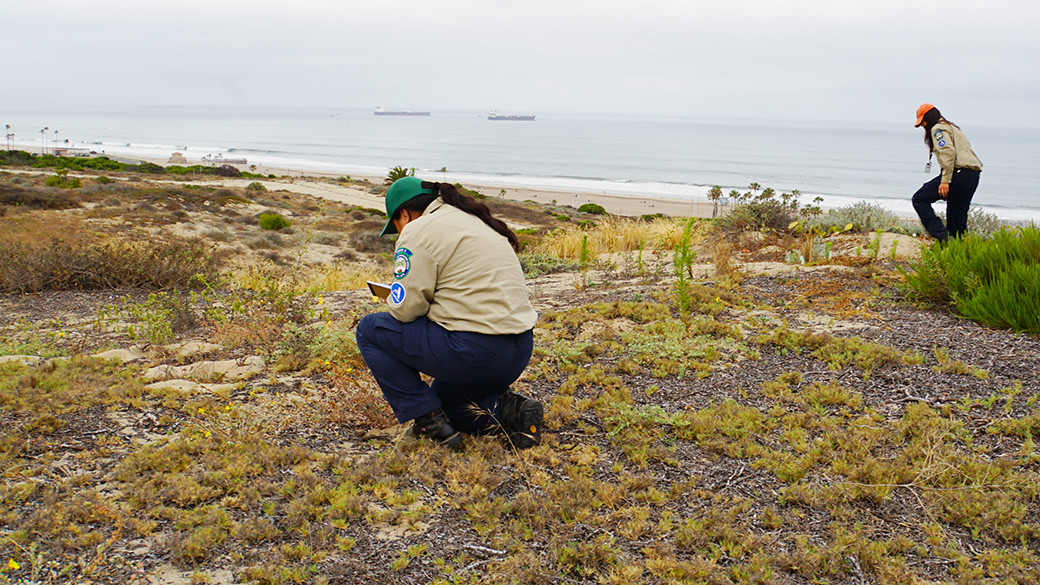
As interns with Los Angeles World Airports, Los Angeles Corpsmembers are monitoring native plant species that benefit the El Segundo Blue Butterfly.
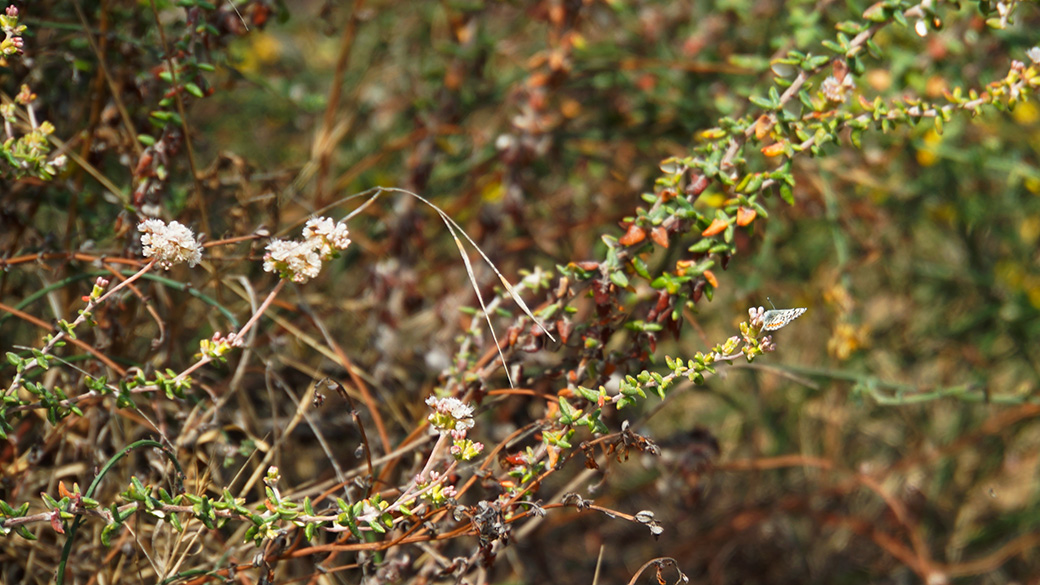
Native to the sandy dunes of Southern California, these rare butterflies depend solely on Sea Cliff Buckwheat for survival. Because of this close relationship, the butterflies are particularly sensitive to environmental changes which makes them an important indicator of ecosystem health. Scientists have found that by conserving habitat for El Segundo Blue Butterflies, all the plants and animals in the dunes benefit.
“It’s not just a butterfly,” said Los Angeles Corpsmember Oswaldo Sanchez. “Our sponsor told us there’s 900 species, lots of biodiversity here. It’s crazy! There are birds, insects, lizards…”
Endangered Species
A female El Segundo Blue Butterfly rests atop a native bush in its historical 4.5 square miles of native habitat along the Pacific Ocean in Los Angeles County. Females feature dull brown colored wings with an orange border, while the males are a brilliant blue with an orange border. The species has been listed as endangered since 1976.
To keep this rich habitat intact, CCC Corpsmembers are interning with Los Angeles World Airports, which governs LAX, Natural Resources Management Team. LAWA created the Dunes Habitat Restoration project in 1986. Through this partnership, CCC Corpsmembers get an opportunity to gain field experience and learn first-hand what it takes to help small creatures thrive in the big city.
“Before I joined this internship, restoration just seemed like planting. But really, it’s a bigger picture,” said Pao. “Yes, we do planting. Yes, we do watering. But there’s also surveying that is important – keeping track, of the butterfly count every year.”
Taking a comprehensive approach to conservation, many actions are taking place to restore this critical Los Angeles habitat. Corpsmembers are also engaging in plant survivorship surveys, seed-banking, and invasive species removal.
“The hardest part would have to be invasive removal, removing the ice plant, because it’s in the succulent family. They carry water in the leaves and that makes them heavy,” said Sanchez. “We have to remove all that by hand because tools would just damage the rest of the ecosystem.”
The effort is worth it. By helping the iconic El Segundo Blue Butterfly chart a positive course to recovery, CCC Corpsmembers are strengthening biodiversity and making it possible for residents to reconnect with the native landscapes of Los Angeles.
“It feels a little more rewarding because instead of taking away, you’re adding on to the planet,” Sanchez said. “Eventually this does make a difference in the long run.”