
WSP Placement Sites
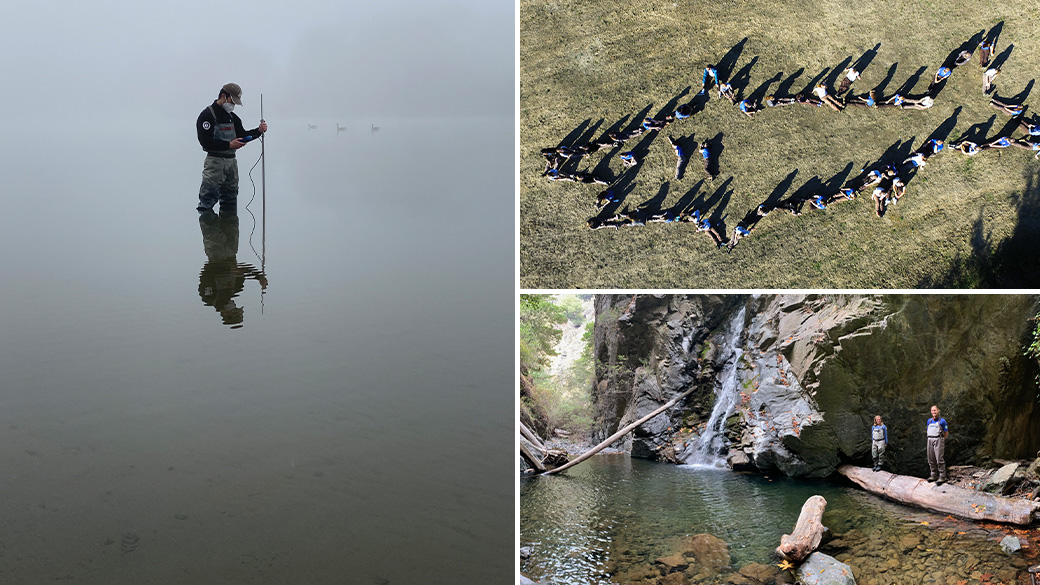
Find the site for you!
View WSP Positions and picture yourself working alongside our fantastic mentors.
View Placement Sites
Year 33 Service Term: October 5, 2026 – August 19, 2027
The following sites are listed in order from Northern California to Southern California.
Please Note: Placement Sites could be subject to change. WSP staff will notify applicants via email.
Yurok Tribe Environmental Department - Klamath | Two Corpsmembers
Placement Site Address: 15900 Hwy 101 North, Klamath, CA 95548 – Klamath City Data Information Link
Mentor: Maddie Urquhart, Water Program Coordinator
Field Leaders: Kat Major, Environmental Specialist
Number of Corpsmembers at Site: Two
Number of Years Site has Hosted WSP Corpsmembers: 18
Service Hours:
- 8-hour days: 95%
- 10-hour days: 4%
- >10-hour days: 1%
Housing Offered: No
Work Vehicle Provided: Yes, with advance scheduling.
Corpsmember Time Spent in Field/Office:
- In the field: 75%
- In the office: 25%
Corpsmember Activities:
- Water Quality Monitoring: 50%
- Data Entry: 15%
- Commuting To/From Field Sites: 10%
- Volunteer Management: 5%
- Education & Outreach: 5%
- Sediment Surveys: 5%
- Habitat Surveys: 5%
- Potential for working with other Tribal Departments (Food Sovereignty, Fisheries Program, etc.): 2%
- Computer Modeling (Hydrograph/Shade): 2%
- CRAM or RIP RAM: 1%
Placement Site Objectives and Organizational Needs:
The Yurok Tribe Environmental Department, Water Program focuses on protecting tribal water resources through monitoring, research, and permitting. Water Program staff perform field work in a variety of aquatic habitat types. Corpsmembers will gain training and experience with an array of industry-standard instruments used in aquatic science professions including hydrology, water quality monitoring, fisheries, and data management and analysis.
Most of the Yurok Tribe Reservation communities are remote, underserved towns and housing developments, some without municipal utility services.
Most households within the reservation rely on the Klamath River and its tributaries for drinking water and subsistence. By assisting staff to perform their fieldwork, WSP Corpsmembers placed at YTED have been an important component in the effort to protect the Yurok Tribe’s water resources. Corpsmembers have also provided valuable education to local children regarding the importance of water quality, life pathways of aquatic species, and how these ecological topics impact the Yurok Tribe’s culture. Continuing this partnership maintains the efficiency in which the Yurok Tribe Environmental Department protects Klamath River water resources and serves its community members. In the past, previous Corpsmembers have been highly involved in the Klamath River Cleanup, and the outreach and organization provided by Corpsmembers has proven invaluable.
Mentorship Style:
To provide Corpsmembers with as much communication and guidance possible, the Mentor and Corpsmembers will share the same office space. Such an arrangement will exemplify the professional and supportive interpersonal behavior conducted in the Water Program. Maddie Urquhart’s philosophy is to meet Corpsmembers where they’re at and cultivate the space for autonomous integration into the Water Program team. By modeling the behaviors and values expected from Corpsmembers and personalizing guidance to individual interests, strengths, and learning styles, they have room to grow in competence, confidence, and connection.
Unique Characteristics of Placement Site:
Klamath River Dam Removal is a symbol for the river restoration movement, and the Yurok Tribe has provided steward leadership. The unique opportunities offered to Corpsmembers include: the opportunity to contribute to the largest dam removal and river restoration project in US history, performing environmental management work through a Yurok/tribal perspective, witnessing the social impact of that effort on the community served, exposure to Yurok tribal culture, and a broad introduction to Natural Resources management through assisting multiple Departments and Programs with diverse tasks.
Knowledge, Skills, and Abilities Desired in Corpsmembers:
- Passion to have a positive impact on an impaired watershed
- A willingness to serve an underrepresented, tribal community
- Cooperative team member
- Experience and/or coursework involving hydrology and water quality
- Ability to wade in swift water
- Ability to swim
- Experience working or recreating in steep and uneven terrain
- Ability to work in adverse weather conditions
- Ability to evaluate risk and safety in the field
California Department of Fish & Wildlife - Arcata | Four Corpsmembers
Placement Site Address: 50 Ericson Ct., Arcata CA 95521 – Arcata City Data Information Link
Site Supervisor: Seth Ricker, CDFW Senior Environmental Scientist
Mentors: Colin Anderson, CDFW Environmental Scientist; John Deibner-Hanson, CDFW Environmental Scientist
Field Leaders: Jolyon Walkley, Environmental Scientist; Chris Loomis, Senior Environmental Scientist
Number of CMs at Site: Four
Number of Years Site has Hosted WSP CMs: 29
Service Hours:
- 8-hour days: 75%
- 10-hour days: 22%
- >10 hour days: 3%
Housing Offered: No
Work Vehicle Provided: Yes
CM Time Spent in Field/Office:
- In the field: 75%
- In the office: 25%
Corpsmember Activities:
- Spawner/Carcass/Redd Surveys: 15%
- Snorkel Surveys: 10%
- Weir Operation: 10%
- Screw Trap Monitoring: 10%
- Seining: 10%
- Field PIT Tagging: 10%
- Data Entry: 10%
- Data Synthesis, Report Writing: 5%
- DIDSON Installation/Monitoring: 10%
- Tangle Netting: 5%
- Gear Maintenance: 5%
Placement Site Objectives and Organizational Needs:
The overall goal of this Placement Site is to conduct anadromous fisheries population research and monitoring. Most days will be spent conducting fisheries surveys in local streams or trapping fish at the Freshwater Creek weir. Occasional “office days” will be spent working at the Arcata field office, both processing and analyzing field data. The daily activities of Corpsmembers will be directed by the site Mentor. After reporting to work at 7:30-8:30 a.m., Corpsmembers will be assigned to work with a crew of one or two experienced Scientific Aids and/or CDFW Environmental Scientists.
Most field surveys will require an entire eight-hour day to complete. During late October Corpsmembers will assist with seining and tagging of juvenile Coho Salmon as part of an over-winter survival study. From November through March, CMs will perform spawning ground surveys. While performing the surveys CMs will hike upstream over rocks, mud, and logs in cold, swift water. The objective will be to locate salmon carcasses, salmon nests (redds), and live fish. CMs will learn multiple scientific field protocols, and how to use hand-held global positioning systems (GPS) and electronic field data entry devices. December through February, CMs will assist with trapping and tagging adult salmonids at the Freshwater Creek weir and tangle netting adult fish in the Mad River.
During peak migration times, the weir will be staffed 24 hours/day. Therefore, CMs should be prepared to work occasional off-hour and weekend shifts. March through June CMs will assist with trapping and PIT tagging Pacific Lamprey and juvenile salmonids captured in the out-migrant trap installed at the Freshwater Creek weir. From mid-June through mid-August, Corpsmembers will help conduct snorkel counts of juvenile salmonids in the wild and scenic Smith River.
CDFW is charged with public resource assessment and management responsibility for native fish and wildlife. Wildlife and their habitats provide essential ecosystem function services to communities. These services provide both economic benefits as well as social and cultural value. WSP Corpsmembers have provided valuable resources to reach these crucial societal needs. WSP CMs will allow CDFW to monitor anadromous fishes across more streams to provide a better understanding of the status and trends of populations.
Mentorship Style:
CMs can expect to learn state-of-the-art science technology, theory, and methods of fisheries science in a supportive and professional atmosphere. CMs will be guided by hands-on Mentors from CDFW Arcata for all tasks for the duration of their term. CMs are treated as valued assets and team members. Corpsmembers receive one-on-one training and mentorship on a daily basis, are encouraged to expand both their knowledge base of science and push themselves to investigate who they are and what they believe in.
Unique Characteristics of Placement Site:
CDFW Arcata provides the next generation of resource assessment professionals with the valuable, hands-on learning experience desired by employers and college and university programs for advanced degrees in biological sciences. The team has been innovating and setting the standard for scientific data collection in Northern California alongside CMs for 29 years. Both Placement Site Mentors and numerous Placement Site staff are WSP Alumni.
Knowledge, Skills, and Abilities Desired in CM:
- Highly motivated individuals
- Passion for fisheries and watershed science
- Desire to work outside / tolerate inclement weather
- Prior fisheries/natural resources and backcountry skills experience beneficial
Bureau of Land Management - Arcata | Two-Three Corpsmembers
Placement Site Address: 1695 Heindon Rd, Arcata, CA 95521 – Arcata City Data Information Link
Mentors: Zane Ruddy, Fish Biologist and Sam Flanagan, Geologist
Number of Years Site has hosted WSP Corpsmembers: 10
Number of Corpsmembers at Site: Two to Three
Service Hours:
- 8-hour days: 70%
- 10-hour days: 20%
- >10-hour days: 10%
Housing Offered: No
Work Vehicle Provided: Yes
Corpsmember Time Spent in Field/Office:
- In the field: 50%
- In the office: 50%
Corpsmember Activities:
- Spawner/Redd Surveys: 20%
- Post-Restoration Monitoring/Maintenance: 5%
- Commuting To/From Field Sites: 10%
- Habitat Surveys: 10%
- LWD Installation: 10%
- Education & Outreach: 5%
- Invasive Species Monitoring and Suppression: 5%
- Snorkel Surveys: 10%
- GIS Mapping: 5%
- Data Entry: 5%
- Seining: 5%
- Water Quality Monitoring: 10%
Placement Site Objectives and Organizational Needs:
Corpsmembers will primarily focus on salmon and steelhead population monitoring, stream habitat monitoring, habitat restoration planning and implementation, and outreach activities (e.g., field trips with schools and the public). Projects and tasks the WSP Corpsmembers will work on include spawner surveys in coordination with Mattole Salmon Group and CDFW, juvenile snorkel surveys, summer adult steelhead snorkel surveys; invasive species monitoring and suppression; Salmon Creek (Headwaters Forest Reserve) stream gauge maintenance and data analysis (discharge/turbidity); wood installation habitat projects; and attending various workshops and trainings. Our fisheries/watershed program is small (one fish biologist, one geologist), so the Corpsmembers provide our site with the capacity to monitor conditions on BLM-managed lands and inform management decisions.
Mentorship Style:
Corpsmembers will be co-mentored by Zane Ruddy (fish biologist) and Sam Flanagan (geologist), who see Corpsmembers as an integral part of the BLM watershed team. At this site, Mentors interact daily with Corpsmembers, providing technical assistance and guidance as needed to meet the task at hand. Corpsmembers and Mentors work together directly on several projects and Corpsmembers are provided opportunities to work independently in areas that interest them most. They encourage an open line of communication to ensure they are meeting each Corpsmember’s expectations both as Mentors and as a Placement Site overall.
Unique Characteristics of Placement Site:
The BLM experience is unique because the WSP Corpsmembers will serve on a wide range of projects across a highly diverse landscape, with habitats ranging from temperate coastal lagoons and estuaries to hot, dry, and rugged interior mountains. The WSP Corpsmembers will gain knowledge in vastly different watersheds and take part in fish (e.g., population and habitat monitoring) and non-fish projects (e.g., stream gauge operation).
Each day the WSP Corpsmembers will serve with two experienced BLM watershed professionals and other highly specialized multi-resource staff (e.g., botanist, forester, wildlife biologist, etc.), as well as government agencies and non-profit organizations that share the same watershed restoration and fish recovery goals. These agencies and organizations include the California Department of Fish and Wildlife, U.S. Forest Service, Wiyot Tribe, Mattole Salmon Group, Mattole Restoration Council, and Sanctuary Forest.
Knowledge, Skills, and Abilities Desired in Corpsmembers:
- Ability to work in rugged conditions (e.g. steep terrain)
- Comfortable swimming/snorkeling in creeks and rivers
- Ability to work long days and drive long distances
CalTrout - Arcata | Two Corpsmembers
Placement Site Address: 1380 9th Street, Arcata, CA, 95521
Arcata, California (CA) – City Data Information Link
Mentors (3): Dr. Gabe Rossi, UC Berkeley Research Scientist; Matt Metheny, Senior Project Manager; Rob George, Eel River Project Manager
Field Leaders (2): Ashley Shannon, Project Manager; Dom Davis, Fisheries Biologist
Number of Corpsmembers at Site: Two
Number of Years Site has Hosted WSP Corpsmembers: 0
Service Hours:
- 8-hour days: 100%
Housing Offered: No
Work Vehicle Provided: Yes
Corpsmember Time Spent in Field/Office:
- In the field: 50%
- In the office: 50%
Corpsmember Activities:
- Water Quality Monitoring: 1%
- Screw Trap Monitoring: 3%
- Weir Operation/Maintenance and Video Review: 13%
- DIDSON Installation/Monitoring: 4%
- Snorkel Surveys: 4%
- Field PIT Tagging: 1%
- Seining: 10%
- Data Entry: 10%
- Data Synthesis, Report Writing: 5%
- GIS Mapping: 10%
- Pre and Post Restoration Monitoring/Maintenance: 10%
- Invasive Plant Removal: 5%
- Maintenance (Gear, Pit Tag Array, Field Equipment): 5%
- Site Specific Outreach/ Education: 8%
- Commuting To/From Field Sites: 5%
- Creating Scientific Posters and materials 3%
- Conservation Program Research: 3%
Placement Site Objectives and Organizational Needs:
Corpsmembers will be supporting both the Eel River Restoration and Conservation Program and the Eel River Fisheries Monitoring Program. Objectives of the Eel River Restoration and Conservation Program include identifying restoration and conservation opportunities in the Eel River watershed, coordinating with restoration partners across the watershed, implementing restoration in the estuary for the purpose of fisheries habitat restoration, conducting invasive aquatic species removal, fish monitoring, and environmental education and outreach.
The organization needs additional capacity to support these activities as they are entering into a critical time of restoration and monitoring need in the watershed. Accelerated restoration and monitoring activities are needed due to the severe scale of impacts to watershed and fisheries habitat over the past 100 years, combined with the planned decommissioning of two large dams in the upper Eel River watershed, making the next few years a pivotal time to leverage additional help for these activities. The Corpsmembers will add capacity to the organization by providing a support role to fisheries biologists and project managers.
Corpsmembers will assist with the Fisheries Monitoring Program in the Eel River. This will include working on the management of and research on, invasive Sacramento Pikeminnow in the South Fork Eel River in Northern California during the Spring and Summer and salmon monitoring in the winter. The candidates may work on pikeminnow eradication, monitoring, trapping and tagging of juvenile salmonids, video and sonar surveillance, as well as associated studies on the interaction between invasive pikeminnow and native salmonids. This work will be conducted with CalTrout staff and project partners from CDFW, UC Berkeley, the Wiyot Tribe, Round Valley Tribe, and local non-profits.
Mentorship Style:
Gabe Rossi’s mentorship style is grounded in hands-on exposure to practical work experience (field, lab, writing) followed by debriefing and connecting the practical work to bigger picture restoration/conservation goals. He believes you learn first by doing and then by reflecting. Making some mistakes in a controlled environment is an important aspect of learning. Exposing mentees to the reality (both the joys and hardships) of fisheries work is where learning happens. I have worked at nearly every level of the fisheries profession (student, field technician, field lead, supervisor, consultant, analyst, academic researcher, public speaker, and policy advisor). This experience allows me to help early career staff to connect seemingly mundane tasks to the full scope of restoration and conservation goals. I try to inspire people in this profession – to connect their work and effort to outcomes that have meaning for society. My goal as a Mentor is for mentees to gain practical skills, an understanding of the full scope of fisheries work, and most importantly a sense of purpose and inspiration.
Rob George’s approach for mentorship is based on empowering a Corpsmember with new skills/tools and creating a relationship where they can take ownership of their work. Matt’s mentorship style is to picture himself in the other person’s place and imagine what he would want to know and learn in that position. This can be a good way to identify what knowledge and skills to share; and sometimes a topic arises that neither person knows much about, and both people get the chance to learn together.
Unique Characteristics of Placement Site:
The North Coast office of CalTrout has a strong culture of growth rooted in meaningful, community centered work. Local staff meets weekly to reflect on the intentions and values that guide their efforts, and CMs are encouraged to participate in and help shape these conversations. This provides a foundation for understanding of what a collaborative, respectful, and values driven workplace can look like in practice. Being placed in this office offers exposure to North Coast fisheries and restoration, collaborative decision making, watershed scale conservation, and relationship-based project work. The team regularly engages in collective training to strengthen communication and deepen understanding of one another’s perspectives.
The CalTrout team prioritizes the relationships that drive their work and foster a culture where every staff member’s perspective is valued and where autonomy and trust are built into decision making. Statewide, all 70 CalTrout staff meet bi-weekly on Zoom to share updates, stay connected, and strengthen cross team relationships. Together, these practices reflect a strong commitment, both locally and across the organization, to healthy communication and shared understanding of collective work. For Corpsmembers, this means being immersed in a functional, evolving, and culturally responsive workplace, with opportunities to learn from practitioners, scientists, and conservation leaders across California and to gain a clearer sense of what their own career path in this field can look like.
Additionally, the office collaborates with a range of agencies, consulting firms, and universities and CM’s will have the ability to observe and engage with this wider community, allowing them to grow a professional network that could assist in the post WSP career.
Knowledge, Skills, and Abilities Desired in Corpsmember:
- Interest in fisheries monitoring and riparian restoration
- Experience or strong interest in outreach
- Previous fish ID experience preferred but not required
District A Team Leader - Eureka | One Corpsmember
Placement Site Address: 3517 W St Eureka, CA 95503 – Eureka City Data Information Link
Mentor: Jason Lopiccolo Region I Program Coordinator
Number of CMs at Site: Two
Number of Years Site has Hosted WSP CMs: 33
Service Hours:
- 8-hour days: 10%
- 10-hour days: 85%
- >10-hour days: 5%
Housing Offered: No
Work Vehicle Provided: Yes
CM Time Spent in Field/Office:
- In the field: 35%
- In the office: 65%
Corpsmember Activities:
- Corpsmember Support: 20%
- Education and Outreach: 20%
- Volunteer Recruitment & Management: 15%
- Editing/Writing/Data Tracking: 15%
- Commuting: 10%
- Field Work: 10%
- Social Media: 5%
- Supporting WSP Staff with Various Projects: 5%
Placement Site Objectives and Organizational Needs:
The Watershed Stewards Program (WSP) is dedicated to improving watershed health by actively engaging in restoration science, civic service, and community education while empowering the next generation of environmental stewards. WSP was established in 1994 as a comprehensive, community-based watershed restoration and education program. CMs serve in coastal watersheds throughout California. WSP is a program of the California Conservation Corps supported and funded by AmeriCorps and The Fisheries Grant Restoration Program (FRGP). WSP is also a professional development program, focused on training the next generation of environmental professionals.
Team Leaders serving at the Eureka WSP Office get hands-on experience learning how a statewide environmental program is managed while, at the same time, developing the leadership skills that will serve them throughout their next steps as emergent natural resource professionals.
Each Team Leader supports one of WSP’s four districts where 10-12 CMs serve. Team Leader duties vary greatly throughout the year, but also include consistent tasks such as CM support, tracking program data, and collaborating with staff on current projects. Other tasks include planning for WSP trainings and outreach events that occur throughout the year. Much of the Team Leaders’ fieldwork involves includes traveling to and assisting in the coordination of their district CMs’ Watershed Awareness Volunteer Events (WAVEs). While most other responsibilities require Team Leaders to be in the office, there are also many opportunities for additional field work through site sharing with various Placement Sites. Team Leaders can visit and learn from each CM in their district. Please see the full Team Leader Position Description on WSP’s website.
Mentorship Style:
While TLs primarily fill a role of leadership and have an accompanying level of independence, they receive a unique mentorship experience centered around leadership by having one of the WSP Program Coordinators as a Mentor. Team Leaders at the Eureka WSP office will be given opportunities to work on a wide variety of projects throughout their term as well as the tools and mentorship to develop professionally within the natural resources field.
Communication and feedback between Mentor and TLs is open and ongoing and TLs should feel free to express what their needs are from the program and from their Mentor. Mentor-TLs meetings will be held weekly and individual check-ins will be bi-weekly or as needed. Jason believes strongly in facilitating and fostering diverse, community-based solutions in mentorship; if there’s a question that he doesn’t know or a skill set he doesn’t have, there are those in the community that do and they should be reached out to.
Unique Characteristics of Placement Site:
Highlights of being a Team Leader in the Eureka Office include being part of a dynamic team, engaging in a diversity of projects, and traveling around the state to support CMs. Team Leaders are encouraged to visit each Placement Site of the CMs in their district to gain skills and network, as well as support the CMs socially. Due to its close proximity to the California Conservation Corps campus, CMs placed at the WSP Eureka office have the opportunity to share their skills and learn from CCC CMs. There are also numerous opportunities to network and meet natural resource professionals and educators from around the state. CMs are encouraged to seek out trainings in environmental education and natural resource topics to further their professional goals.
Team Leaders work directly in the offices of WSP and receive first-hand experience in program management. They are responsible for fostering a sense of community among CMs, as well as providing support to CMs, assisting in the administration of WSP, and contributing to CM development. They are encouraged to follow their interests and given support to do independent work, if desired. Team leaders play a pivotal role in the success of WSP year after year.
Team Leaders will have the option to work either a 5/8/40 or 4/10/40 schedule.
Knowledge, Skills, and Abilities Desired in CM:
- Experience/strong interest in serving in a leadership role
- Ability to travel overnight/work on weekends
- Ability to work independently
- Experience with Microsoft Office Suite
- Experience and interest in outreach
- Strong organizational and time management skills
District B Team Leader - Eureka | One Corpsmember
Placement Site Address: 3517 W St Eureka, CA 95503 – Eureka City Data Information Link
Mentor: Jason Lopiccolo Region I Program Coordinator
Number of CMs at Site: Two
Number of Years Site has Hosted WSP CMs: 33
Service Hours:
- 8-hour days: 10%
- 10-hour days: 85%
- >10-hour days: 5%
Housing Offered: No
Work Vehicle Provided: Yes
CM Time Spent in Field/Office:
- In the field: 35%
- In the office: 65%
Corpsmember Activities:
- Corpsmember Support: 20%
- Education and Outreach: 20%
- Volunteer Recruitment & Management: 15%
- Editing/Writing/Data Tracking: 15%
- Commuting: 10%
- Field Work: 10%
- Social Media: 5%
- Supporting WSP Staff with Various Projects: 5%
Placement Site Objectives and Organizational Needs:
The Watershed Stewards Program (WSP) is dedicated to improving watershed health by actively engaging in restoration science, civic service, and community education while empowering the next generation of environmental stewards. WSP was established in 1994 as a comprehensive, community-based watershed restoration and education program. CMs serve in coastal watersheds throughout California. WSP is a program of the California Conservation Corps supported and funded by AmeriCorps and The Fisheries Grant Restoration Program (FRGP). WSP is also a professional development program, focused on training the next generation of environmental professionals.
Team Leaders serving at the Eureka WSP Office get hands-on experience learning how a statewide environmental program is managed while, at the same time, developing the leadership skills that will serve them throughout their next steps as emergent natural resource professionals.
Each Team Leader supports one of WSP’s four districts where 10-12 CMs serve. Team Leader duties vary greatly throughout the year, but also include consistent tasks such as CM support, tracking program data, and collaborating with staff on current projects. Other tasks include planning for WSP trainings and outreach events that occur throughout the year. Much of the Team Leaders’ fieldwork involves includes traveling to and assisting in the coordination of their district CMs’ Watershed Awareness Volunteer Events (WAVEs). While most other responsibilities require Team Leaders to be in the office, there are also many opportunities for additional field work through site sharing with various Placement Sites. Team Leaders can visit and learn from each CM in their district. Please see the full Team Leader Position Description on WSP’s website.
Mentorship Style:
While TLs primarily fill a role of leadership and have an accompanying level of independence, they receive a unique mentorship experience centered around leadership by having one of the WSP Program Coordinators as a Mentor. Team Leaders at the Eureka WSP office will be given opportunities to work on a wide variety of projects throughout their term as well as the tools and mentorship to develop professionally within the natural resources field.
Communication and feedback between Mentor and TLs is open and ongoing and TLs should feel free to express what their needs are from the program and from their Mentor. Mentor-TLs meetings will be held weekly and individual check-ins will be bi-weekly or as needed. Jason believes strongly in facilitating and fostering diverse, community-based solutions in mentorship; if there’s a question that he doesn’t know or a skill set he doesn’t have, there are those in the community that do and they should be reached out to.
Unique Characteristics of Placement Site:
Highlights of being a Team Leader in the Eureka Office include being part of a dynamic team, engaging in a diversity of projects, and traveling around the state to support CMs. Team Leaders are encouraged to visit each Placement Site of the CMs in their district to gain skills and network, as well as support the CMs socially. Due to its close proximity to the California Conservation Corps campus, CMs placed at the WSP Eureka office have the opportunity to share their skills and learn from CCC CMs. There are also numerous opportunities to network and meet natural resource professionals and educators from around the state. CMs are encouraged to seek out trainings in environmental education and natural resource topics to further their professional goals.
Team Leaders work directly in the offices of WSP and receive first-hand experience in program management. They are responsible for fostering a sense of community among CMs, as well as providing support to CMs, assisting in the administration of WSP, and contributing to CM development. They are encouraged to follow their interests and given support to do independent work, if desired. Team leaders play a pivotal role in the success of WSP year after year.
Team Leaders will have the option to work either a 5/8/40 or 4/10/40 schedule.
Knowledge, Skills, and Abilities Desired in CM:
- Experience/strong interest in serving in a leadership role
- Ability to travel overnight/work on weekends
- Ability to work independently
- Experience with Microsoft Office Suite
- Experience and interest in outreach
- Strong organizational and time management skills
California Department of Fish and Wildlife - Eureka | Two Corpsmembers
Placement Site Address: 619 Second Street Eureka, California 95501
Eureka, CA – City Data Information Link
Mentors: James Ray, Senior Environmental Scientist Specialist
Field Leaders: Kelsey McDonald – Plant Ecologist, Johnathan Hollis – Fisheries Biologist, Katie Rian – Wildlife Biologist, Corrina Kamoroff, Wildlife Biologist
Number of Corpsmembers at Site: Two
Number of Years Site has Hosted WSP Corpsmembers: 18
Service Hours:
- 8-hour days: 92%
- 10-hour days: 6%
- >10%: 2%
Housing Offered: No
Work Vehicle Provided: Yes
Corpsmember Time Spent in Field/Office:
- In the field: 60%
- In the office: 40%
Corpsmember Activities:
- Pre/Post-Restoration Monitoring/Maintenance: 25%
- Invasive Plant Removal: 20%
- Native Plant Installation: 4%
- Seining: 10%
- Commuting To/From Field Sites: 10%
- Marijuana Grow Site Reclamation: 5%
- Habitat Surveys: 5%
- GIS Mapping: 5%
- Data Entry: 5%
- Herpetofauna and Avifauna Surveys: 5%
- Site Specific Volunteer Management: 2%
- Site Specific Education & Outreach: 2%
- Water Quality Monitoring: 2%
Placement Site Objectives:
The Mission of the California Department of Fish and Wildlife (CDFW) is to manage California’s diverse fish, wildlife, and plant resources, and the habitats upon which they depend, for their ecological values and for their use and enjoyment by the public. At the Eureka Field Office Placement Site, Corpsmembers will be hosted by the Humboldt-Del Norte Coastal Conservation Team, which is part of CDFW’s Habitat Conservation Program.
The Coastal Conservation Team delivers CDFW’s Mission through two main pathways:
- Lead and partner on landscape conservation planning and implementation efforts including strategies to protect, restore, and enhance target species, key watersheds, priority habitats, and ecosystem processes;
- Administer CDFW’s authority in regulatory processes to ensure the conservation of fish, wildlife, and plant resources by developing avoidance, minimization, and mitigation measures.
Corpsmembers will primarily be involved with projects that fall under pathway number one above. The Coastal Conservation team is made up of a multidisciplinary group of scientists with expertise in fisheries biology, plant ecology, wildlife biology, and aquatic ecology. The team is currently involved in the implementation and planning of several large-scale restoration projects including estuary, coastal dune, riparian and upland forest, and bluff scrub habitats. The emphasis of this team is the protection and restoration of watershed ecological processes that support a variety of species and communities, including salmonids.
In support of this goal, this Placement Site’s organizational needs include additional entry level field focused technician support to increase team capacity in the field. Corpsmembers will be directly involved with restoration activities, such as the removal of invasive species and planting native plant communities. In addition, Corpsmembers will participate in pre-restoration baseline monitoring to help guide new restoration projects as well as post-restoration monitoring to determine restoration effectiveness. Monitoring includes fisheries and aquatic habitat monitoring, native plant community monitoring, and wildlife monitoring
Mentorship Style:
The mentorship style at the Eureka Field Office will be focused on the development of a collaborative, reciprocal relationship with Corpsmembers. Corpsmembers will be empowered to learn new technical skills through hands-on guidance in the field and be supported in their development of professional conduct skills. The foundation of the relationship will be based on understanding the Corpsmembers personal goals for their WSP experience and the requirements of the WSP program paired with clear expectations for the Mentor-mentee relationship and task priorities of the Placement Site.
Unique Characteristics of Placement Site:
As noted earlier, the Coastal Conservation team is made up of a multidisciplinary group of scientists with expertise in fisheries biology, plant ecology, wildlife biology, and aquatic ecology. Corpsmembers placed at this site will experience a wide range of ecological concepts, restoration strategies, and monitoring methods to restore watershed ecological functions and processes that support salmonids and other listed fish through a variety of pathways. They work in close coordination with other CDFW Programs, such as the Fisheries and Lands & Wildlife Programs. Corpsmembers will have opportunities to take part in restoration and monitoring activities with these Programs, further diversifying their experience.
In addition, Corpsmembers serve alongside a wide range of outside partners, including other state agencies, federal agencies, local governments, California Native Tribes, nongovernmental organizations, private consulting companies, and private landowners. Therefore, Corpsmembers will get valuable experience seeing collaborations and partnerships at work. The Supervisor at the Eureka Field Office Placement Site has several years of previous experience mentoring Corpsmembers thereby enhancing understanding of WSP and Corpsmember needs.
Knowledge, Skills, and Abilities Desired in Corpsmembers:
- Enthusiastic about learning
- Team oriented
- Flexible
- Have a strong desire to leave watersheds in a better condition than they found them
- Field experience in biological or other natural sciences
CDFW — Coastal Watershed Planning - Fortuna | Four Corpsmembers
Coastal Watershed Planning and Assessment Program and Southern Humboldt and Northern Mendocino Counties Fisheries Management
Placement Site Address: CA Department of Fish and Wildlife, 1487 Sandy Prairie ct., Suite A, Fortuna, CA 95540 – Fortuna City Data Link
Mentors: David Kajtaniak and Braden Herman, CDFW Environmental Scientists
Number of Corpsmembers at Site: Four
Number of Years Site has Hosted WSP Corpsmembers: 16
Service Hours:
- 8-hour days: 20%
- 10-hour days: 75%
- >10-hour days: 5%
Housing Offered: No
Work Vehicle Provided: Yes
Corpsmember Time Spent in Field/Office:
- In the field: 75%
- In the office: 25%
Corpsmember Activities:
- Spawner/Redd Surveys: 22%
- Snorkel Surveys: 20%
- Commuting To/From Field Sites: 12%
- Data Entry: 10%
- Seining: 5%
- DIDSON Installation/Monitoring: 8%
- Post-Restoration Monitoring/Maintenance: 6%
- Weir Operation/Maintenance and Video review: 2%
- Field PIT Tagging: 5%
- Site Specific Education & Outreach: 2%
- E-Fishing: 1%
- Data Synthesis, Report Writing: 5%
- Maintenance (Gear, Pit Tag array, field equipment): 2%
Placement Site Objectives and Organizational Needs:
The Mission of the California Department of Fish and Wildlife (CDFW) is to manage California’s diverse fish, wildlife, plant resources, and the habitats upon which they depend, for their ecological values and for their use and enjoyment by the public. The Coastal Watershed Planning and Assessment Program (CWPAP) and Southern Humboldt and Mendocino Counties Fisheries Management (SH-M) are CDFW programs with the following primary objectives: conducting fishery-based watershed assessments and corresponding watershed/salmonid recovery planning efforts; and salmonid population monitoring in the Eel River Watershed.
WSP Corpsmembers attain significant field experience in the monitoring of endangered species of salmon and steelhead and gain important first-hand knowledge of fishery management and recovery operations at a state-level agency. Utilizing Coastal California Salmonid Monitoring Plan (CMP) protocols and methods, this site conducts fall and winter spawner surveys in the South Fork Eel River to assess population size and distribution of Coho Salmon as well as collecting additional data on Chinook Salmon and steelhead. This Placement Site also operates 2 ARIS/DIDSON sonar cameras in the fall and winter to determine the run timing and produce adult Chinook Salmon and steelhead abundance estimates for the Mainstem Eel River and Van Duzen River. The data from these fall and winter monitoring efforts measure the progress toward federal and state recovery plans and escapement estimates are critically important in fisheries management planning.
In addition to these fall and winter data collection efforts, this site conducts late spring and summer surveys evaluating the distribution and occupancy of juvenile fish species. These stream surveys consist of mask and snorkel surveys which Corpsmembers collect data on fish species and numbers and also collect important habitat data information. The data collected from these survey efforts plays a critical role informing watershed recovery planning efforts, such as the Salmonid Habitat and Restoration Priorities working group. The Mentors and Site Supervisor are steering committee members in this working group, which is a planning process involving state and federal agencies, California Native Tribes, non-profits, and private landowners to identify effective restoration within priority areas of salmon recovery.
Throughout the year, Corpsmembers also participate in a variety of other field work conducted at this site that includes but is not limited to estuarine species seining and downstream migrant trapping, juvenile fish pit-tagging, juvenile fish minnow trapping, electro-fishing, drought monitoring, etc. Overall, Corpsmembers play a critical role and provide invaluable resources for programs and accomplishing goals and objectives.
Mentorship Style:
Having been a WSP Mentor for 17 years, Dave Kajtaniak is one of the longer standing Mentors in WSP and is able to offer a wide variety of experience in the role as a Mentor. Having worked in the CDFW Fortuna office for 18+ years, Dave is well vested in the watershed monitoring and restoration community. He likes to provide insights to WSP Corpmembers to the community and all the potential possibilities of work in this field. Dave can also provide history and context to monitoring, fish populations, and restoration that has and will continue to occur in the Eel River watershed as well as the entire North Coast.
Braden is just starting his third year at the CWPAP site as well as his third year as a WSP Mentor. As a recent master’s student graduate and having a couple of years in the field, Braden brings a lot of energy and excitement to this office and the development of CWPAP’s monitoring projects and goal of restoring fish populations. Braden shares this excitement and energy with WSP Corpsmembers as he himself is getting to explore new areas and new techniques.
Branden and Dave both share their passion for working in fisheries, the Eel River watershed and with the next line of resource professionals. We both believe in creating a learning environment, a fun-group of folks to work with and trying to provide WSP Corpsmembers a fantastic year at our site that they can always look back on being an informative and enjoyable year of their lives.
Mentors work closely with Corpsmembers both in a small and interactive office setting as well as in the field. Interaction between Mentors and CMs occurs on a weekly basis, and Mentors are generally easily available to their Corpsmembers throughout their year of service. Training is provided for all field and data management activities. Corpsmembers are paired with experienced surveyors (including Mentors and CDFW scientific aids, which usually includes WSP alumni) to ensure a strong grasp of the survey protocols and techniques, which leads to quality data collection and well-trained personnel.
Generally speaking, CMs begin the year with site orientation and getting an understanding of the programs they will be involved in and the watersheds/areas they will be working in. Their term of service begins with various field work opportunities, potentially site sharing prior to starting our 2 main fall and winter projects – SF Eel River spawner surveys and Sonar monitoring in the Main Stem Eel and Van Duzen rivers. CM primarily work on SF Eel spawner surveys from December till mid-February but also have time to gain experience assisting on the sonar crew and performing other monitoring activities. As spawner season winds down, the CMs begin their WOW! and WAVE activities during late February to late April. Late spring is when our migrant trapping activities occur and CM get experience assisting these activities. It is also a good time to potentially site-share at other sites. Late spring and most of summer our juvenile fish mask and snorkel surveys are occurring and CMs spend time camping at established campgrounds to make the survey work more efficient. Estuarine monitoring occurs on a monthly basis throughout the year with project partners – other CDFW offices and the Wiyot Tribe.
Unique Characteristics of Placement Site:
The CDFW and WSP missions are compatible, and Corpsmembers benefit from time served here. This site’s Corpsmembers gain invaluable experience in a diverse array of field/biological sampling methodologies in unique, biologically significant locations that other sites are not able to provide. In addition, the CWPAP site is one of the few placement sites in the WSP program that provides the opportunity to acquire hands on experience with ARIS sonar cameras. This technology is providing invaluable data on the adult salmonid populations in the Eel River Watershed and is being utilized in other watersheds along the entire Pacific Northwest. Moreover, with CDFW being the lead agency in the recovery of salmonid species, the on-going programs at this site work with a wide range of partners, including the following: other federal and state agencies, California Native Tribes, non-governmental organizations, 7 private consulting companies, municipalities, and private landowners. Therefore, Corpsmembers get valuable experience seeing collaborations and partnerships at work.
One of the current Mentors and Site Supervisor are past WSP Corpsmembers, and they have an intimate understanding of the importance and role they play as Mentors to their WSP Corpsmembers. Collectively, the Mentors and Site Supervisor have 30+ years experience in the role as WSP Mentors and are dedicated to providing a supportive, inclusive, and professional learning environment. It is the site’s wish to maintain this partnership for the benefit it provides the public and significant environmental resources in the region. Moreover, this site has been able to provide seasonal employment to our WSP Corpsmembers proceeding their completion of their term of service. This has been a mutually beneficial arrangement as WSP Corpsmembers have the opportunity to acquire state employment with a natural resource agency, and it maintains consistency and quality assurance for our program.
In addition, incoming WSP Corpsmembers gain valuable knowledge and insight by working alongside these former WSP Corpsmembers who have an understanding of all the benefits of being in the WSP program and how to make the most of their WSP term of service. The Placement Site and staff are and will continue to play an important role in the dam removal process in the Eel River Watershed. The Eel River Watershed, in part, because of the future dam removals, is certainly in the spotlight and fosters a passionate community of tribal members and employees, fish biologists, restoration practitioners, multi-agency personnel, non-profit and environmental groups, the fishing community, and local landowners and private businesses
Knowledge, Skills, and Abilities Desired in Corpsmember:
- Ability to hike in streams/rough terrain during periods of inclement weather
- Be a capable swimmer
- Comfortable with tent camping or staying in rustic field housing during certain times of the year
- Ability to work a flexible schedule when needed, such as occasional weekend work and ability to go on multi-overnight trips
- Strong interest in conducting biological and extensive fisheries monitoring
- Experience with driving 4×4 vehicles on non-paved roads is preferred and a comfort level with navigating back roads and off-highway terrain to access monitoring areas
- Being mindful of one’s safety as well as the safety of other team members
- Adept with communicating with supervisors and team members
- Work well in a team setting but also capable of independent work with little supervision.
- Motivation, passion, and curiosity for the Placement Site activities.
Eel River Watershed Improvement Group (ERWIG) and California Conservation Corps Fortuna (CCC Fortuna) - Fortuna | Two Corpsmembers
Placement Site Address: 1500 Alamar Way, Fortuna, CA 95540 – Fortuna City Data Link
Mentors: Brian Starks, CCC Fish Habitat Specialist; Isaac Mikus, ERWIG Executive Director; Rachael Aguirre, Fish Habitat Assistant
Field Leader: Dave Heaton, Project Manager
Number of CMs at Site: Two
Number of Years Site has Hosted WSP CMs: 31
Service Hours:
- 8-hour days: 20%
- 10-hour days: 75%
- >10-hour days: 5%
Housing Offered: No
Work Vehicle Provided: Yes
CM Time Spent in Field/Office:
- In the field: 60%
- In the office: 40%
Corpsmember Activities:
- Site Specific Education & Outreach: 25%
- LWD Installation: 30%
- Site Specific Volunteer Management: 5%
- Restoration Project Field Design: 2%
- Commuting To/From Field Sites: 10%
- Invasive Plant Removal: 5%
- Spawner/Redd Surveys: 3%
- Habitat Surveys: 1%
- GIS Mapping: 2%
- Pre and Post-Restoration Monitoring/Maintenance: 2%
- Native Planting: 10%
- Data Entry: 1%
- Data Synthesis, Report Writing: 1%
- H2O Monitoring: 1%
- Seining: 1%
Placement Site Objectives:
The California Conservation Corps is a service program for young people to develop work and life skills while helping conserve and restore our natural resources. Guided and supervised by CCC and partner organization staff, CCC crews implement restoration projects like installing logs and root wads in streams that serve as cover structures in pool and flat-water habitats. Restoration work is focused on streams and watersheds that have the greatest ability to maintain or increase threatened and endangered salmonid populations over the long term. The work zone of the Fortuna CCC is from northern Mendocino County to northern Del Norte County.
The Eel River Watershed Improvement Group (ERWIG) is a non-profit focused on improving habitat for native salmonids. ERWIG plans, designs, and implements fish habitat projects through funding from state & federal agencies and from private donations.
ERWIG and the CCC have a long history of working together for anadromous fish, and they will continue to team up with WSP to provide a full fish restoration experience for Corpsmembers.
The Corpsmembers at the ERWIG/CCC Fortuna site will engage in the following activities in the pursuit of developing and implementing watershed restoration projects. They will hike streams and riparian zones to evaluate for restoration opportunities, design specific project elements, collect pre- and post-project evaluation data and participate in project implementation. They will assist with project development by creating maps using ArcGIS Pro, photo point documentation, aiding in writing project proposals, researching stream data and organizing information. They will work hand in hand with CCC Corpsmembers on stream restoration projects which include moving logs into place using grip hoists and hand tools, anchoring logs using wood drills and roto hammers, invasive plant removal, and planting native plants in the riparian zone and on unstable slopes.
WSP Corpsmembers at this Placement Site help maintain and increase the CCC and ERWIG’s capacity to develop and implement watershed restoration projects. Not only are more projects planned and completed, having WSP Corpsmembers at the site increases the quality of the work. In addition to the restoration work, they will plan and implement the Creek Days Environmental Education Fair, a 3-day event visited by over 300 local elementary school students. The tasks involved include picking the site, contacting teachers and schools, organizing WSP volunteers, organizing materials, and coordinating logistics. This is a huge and important task, and without WSP Corpsmembers at this site, Creek Days would not happen. The Corpsmembers will have the opportunity to attend various trainings and conferences, potentially including but not limited to: Lamprey Information Exchange, SHaRP workshops, CCC chainsaw class, and CDFW spawner survey training.
Mentorship Style:
Our site often employs group mentoring, where both Mentors and WSP Corpsmembers work as a team to accomplish a task. Individually, Isaac’s mentorship philosophy is to provide the tools WSP Corpsmembers need to succeed but allow them plenty of independence to maximize their opportunity to learn and gain confidence in their abilities. Though he is always available if they need guidance. Brian likes to find out what a Corpsmember wants to get out of their term and find a way to guide them in that direction. What this looks like in practice is making expectations clear on what needs to be done throughout the term, then providing options on what can be done in addition to those critical needs. These can be independent projects, diving deeper in the main projects, or site sharing, for example. In general, Brian believes in giving autonomy in many of the Placement Site tasks, but he is always there to guide and answer questions. Rachael, as the newest mentor of the site enjoys taking a supportive approach, offering corpsmembers advice, knowledge, and suggestions on a variety of subjects, including: the Humboldt area, Creek Days, the CCC program, how to get involved locally, events, and career and volunteer opportunities. She enjoys being able to teach corpsmembers hands-on and help them build the skills and confidence to tackle site tasks on their own. Her office is right next to the WSP corpsmembers, so she enjoys having regular check-ins and socializing with the corpsmembers to get to know their needs and goals.
There will be a structured style of mentorship laid out from the beginning of the term, with regular monthly meetings to lay out goals and schedules. At the same time, the Corpsmembers will have a significant amount of autonomy and will be expected to pursue project goals independently. The Mentors will be available for guidance, assistance, and advice with most aspects of the corpsmember’s work. The style of mentorship will vary from Corpsmember to Corpsmember, and the Mentors can adjust as needed. The Corpsmembers at this site work closely with the Mentors, which promotes an environment where ideas, advice and input flow organically as we work on individual and collaborative projects. Mentorship will largely be shared between Mentors, though it will depend whether current projects are CCC, ERWIG, or shared projects. The CCC Mentors will take the prominent role when working on CCC projects, which include large wood installations, project design, and invasive plant removals. The ERWIG Mentor will take the prominent role on ERWIG projects.
Corpsmembers will begin their term at the end of summer restoration season, where they will have the chance to serve on in-stream large wood installation with our CCC crews. During late fall and winter, projects will shift towards native revegetation, Creek Days planning, and project planning. In spring, Corpsmembers will get opportunities to work on large wood design, go on surveys for invasive Arundo, and end spring with the implementation of Creek Days. Towards the end of the term, projects will shift back towards large wood installation.
Unique Characteristics of Placement Site:
WSP Corpsmembers at the ERWIG/Fortuna CCC site get a dynamic, hands-on experience involving all aspects of watershed restoration. They assist with the development and implementation of projects that take them from the streams to the ridge tops. Project types at this site include instream wood loading, invasive exotic plant removal, native revegetation, and a variety of other projects that provide benefits to fish and wildlife.
This site provides the truly unique experience of being involved with projects from the pre-planning process all the way through implementation. The experience gained at all stages of the process propels Corpsmembers forward in their careers like no other site. In addition, Corpsmembers at this site plan and execute the Creek Days Environmental Education Fair, a 3-day outdoor event where over 300 K-8 students attend. Planning this event will help Corpsmembers build leadership and organizational skills that they can take with them to any job.
The flexibility of this site allows Corpsmembers to pursue their interests within the field, while being in a supportive environment so they can really get the most out of their term. They also get the opportunity to work with resource professionals from a variety of agencies, native tribal organizations, nonprofit groups, and private landowners. Corpsmembers at this site work alongside the CCC Corpsmembers and staff, as well as ERWIG and other project partner staff. Though diverse, members of our team all share the common goal of enhancing the environment to increase the fecundity of salmonids and other native species in our north coast streams.
With partner organizations that share similar goals but offer a diversity of experiences and WSP alumni as Field Leaders, all Mentors, and the Site Supervisor, WSP Corpsmember experience at the ERWIG/CCC Fortuna site is second to none. Corpsmembers here will find their path to whatever career inspires them.
Knowledge, Skills, and Abilities Desired in CM:
- Comfortable outside in rough terrain and inclement weather
- Proactive, with an ability to find the next step in a large project without a need for specific instruction
- Comfortable with office days
- Experienced pickup truck driver
- Computer literate
- Leadership skills, adaptability, team-player, communicative.
Point Reyes National Seashore - Point Reyes Station | Two Corpsmembers
Placement Site Address: 1 Bear Valley Road, Point Reyes Station, CA 94956 – Point Reyes Station City Data Information Link
Site Supervisor: Michael Reichmuth, Fisheries Biologist & Program Manager
Mentor: Brentley McNeill, Fisheries Biologist
Number of CMs at Site: Two
Number of Years Site has Hosted WSP CMs: 13
Service Hours:
- 8-hour days: 90%
- 10-hour days: 10%
Housing Offered: Yes, ~$550 per month and includes utilities
Work Vehicle Provided: Yes
CM Time Spent in Field/Office:
- In the field: 75%
- In the office: 25%
Corpsmember Activities:
- Screw Trap Monitoring: 15%
- Spawner/Redd Surveys: 10%
- Habitat Surveys: 10%
- Commuting To/From Field Sites: 9%
- Data Entry, Synthesis, Report Writing: 8%
- Field PIT Tagging: 6%
- Snorkel Surveys: 6%
- Seining: 6%
- Creating blogs and project summaries: 5%
- Program meetings and trainings: 4%
- Native Plant Propagation: 2%
- Invasive Removal: 1%
- Gear and Equipment Maintenance: 2%
- Hatchery Work: 2%
- GIS Mapping: 2%
- Site Specific Education and Outreach: 2%
- Restoration Monitoring/Maintenance: 4%
- Site Specific Volunteer Management: 2%
- E-Fishing: 2%
- H2O Monitoring: 1%
- Biological Sample Analysis Lab Work: 1%
Placement Site Objectives:
Point Reyes National Seashore (PRNS) has undertaken an ambitious, multi-decade long program to maintain and enhance endangered Coho Salmon (Oncorhynchus kisutch) and threatened steelhead (O. mykiss) populations within the watersheds managed by the National Park Service (NPS) in the San Francisco Bay Area Network (SFAN). Their monitoring program maintains over twenty years of trend data to determine the success of restoration activities and is used as a life cycle monitoring station as described in CDFW, Fish Bulletin 180 (CMP).
PRNS is committed to continuing the career development of WSP Corpsmembers (CMs) throughout their service year. Hosting WSP CMs affords PRNS the opportunity to perform small-scale stream restoration projects and complete the monitoring necessary to inform vital Coho Salmon conservation strategies.
Mentorship Style:
Mentorship is provided by both the Site Supervisor and the site Mentor at PRNS. Mentors aim to provide a genuine interest in each CM’s professional growth during the service term while providing mutual respect for each other’s wellbeing. They provide guidance and support while also encouraging independence and critical thinking through blog posts and CM specific projects. Both the Site Supervisor and Mentor strive to listen actively while offering constructive feedback. In general, they have an open-door policy and try to encourage CMs to voice their opinions, concerns, or any other feedback. They also believe in collaborating and taking on challenges as a team. During the CM’s service term, Mentors conduct meetings and events in a manner that promotes team building.
Unique Characteristics of Placement Site:
PRNS provides a unique opportunity for WSP CMs to work in both a designated wilderness and one of the largest urban interfaces in California. The proximity of PRNS to the city of San Francisco allows CMs to experience the challenges and rewards of working in environments at the doorstep of a large, culturally diverse population. Since the mission of the NPS is to preserve natural resources for future generations, CMs are exposed to a variety of natural resource-based monitoring and restoration projects.
PRNS provides professional staff support on a range of topics including but not limited to education, outreach, cultural resources, wildlife biology, vegetation management, water quality, and rangeland management. CMs placed at PRNS can utilize their access to a variety of NPS resources and professionals to expand skillsets and build upon current knowledge and interest. Not only does PRNS offer a myriad of topics for CMs to explore, but it also provides a unique opportunity to live and work on some of the most beautiful public lands in the nation. CMs will gain experience throughout the year by learning and implementing techniques for monitoring endangered and threatened aquatic species including Coho Salmon and Steelhead Trout. It is also anticipated that PRNS will continue to provide low-cost housing.
Knowledge, Skills, and Abilities Desired in Corpsmembers:
- Experience with fisheries monitoring techniques
- Experience collecting biological data and performing quality assurance
- Ability to navigate rough terrain in small coastal streams while performing tasks
- Ability to work as part of a team and lead small groups
- Moderate level of physical conditioning to avoid or minimize risk of injury
Marin Water Fisheries Program - Fairfax | Two Corpsmembers
Placement Site Address: 49 Sky Oaks Rd, Fairfax, CA 94930 – Fairfax City Data Link
Site Supervisor: Jonathan Koehler, Fisheries Program Manager
Mentors: Eric Ettlinger, Aquatic Ecologist and Suzanne Whelan, Ecologist/Watershed Volunteer Coordinator
Number of CMs at Site: Two
Number of Years Site has Hosted WSP CMs: 15
Service Hours:
- 8-hour days: 98%
- 10-hour days: 2%
Housing Offered: No
Work Vehicle Provided: Yes
CM Time Spent in Field/Office:
- In the field: 75%
- In the office: 25%
Corpsmember Activities:
- Spawner/Redd Surveys: 30%
- Screw Trap Monitoring: 20%
- Data Entry: 15%
- Site Specific Volunteer Management: 5%
- Commuting To/From Field Sites: 5%
- Site Specific Education & Outreach: 2%
- Post-Restoration Monitoring/Maintenance: 2%
- Snorkel Surveys: 5%
- Field PIT Tagging: 3%
- E-Fishing: 2%
- GIS Mapping: 1%
- Seining: 1%
- Data Synthesis, Report Writing: 1%
- Habitat Surveys: 1%
- Sediment Surveys: 1%
- Native Plant Installation: 1%
- Maintenance (Gear, PIT Tag array, field equipment): 5%
Placement Site Objectives:
The MWFP is dedicated to the conservation, protection, and recovery of native aquatic species. Marin Water’s biologists have been monitoring populations of key species, implementing habitat restoration, and engaging collaborators and the public for over 25 years. The Fisheries Program involves monitoring all freshwater life stages of Coho Salmon and Steelhead in over 22 miles of streams within Marin County. In addition, Marin Water has installed more than 80 large woody debris structures in Lagunitas Creek, treated erosion throughout the watershed, and received multiple grants for salmonid habitat restoration.
The Marin Water Fisheries Program consists of two full-time biologists, working in collaboration with agencies, non-profit groups, and other Marin Water Natural Resources staff. Watershed management is at the core of Marin Water’s Mission Statement: “It is the purpose of the Marin Municipal Water District to manage our natural resources in a sustainable manner and to provide our customers with reliable high-quality water at a reasonable price.” The Sky Oaks Watershed Headquarters, which is where WSP Corpsmembers (CMs) report, looks out on Mount Tamalpais and thousands of acres of forested watershed. The District’s Volunteer Program organizes community outreach projects geared towards watershed protection, including habitat restoration and community science monitoring of aquatic species.
Mentorship Style:
Marin Water’s Mentors strive to create an environment of learning and professional growth where the CMs feel safe, respected, and supported. CMs have their own desks and computers in a shared office space with direct access to Mentors. Fisheries staff meet weekly to discuss safety, schedules, and updates on WSP activities. Mentors meet individually with CMs at least monthly. Marin Water’s watershed staff meet monthly as well, and WSP CMs participate in those meetings. Additionally, CMs are invited to attend the quarterly Lagunitas Creek Technical Advisory Committee meetings to get professional development and hear a diverse group of stakeholders discuss watershed issues.
Mentors accompany CMs in the field to provide training both initially and throughout the various survey seasons. Extensive training on all survey protocols is provided before giving CMs the responsibility of conducting these surveys independently. Mentors strive to make the CMs feel confident in their roles working with sensitive species and collecting high-quality scientific data. Mentors work closely with CMs on their community programs, providing equipment, funding, connections, and guidance to ensure the success of these programs. Marin Water also provides opportunities to take on individual projects, such as developing posters for the annual Salmonid Restoration Federation Conference.
Unique Characteristics of Placement Site:
The Marin Water Fisheries Program is a recognized leader in salmon conservation that offers WSP CMs a scientifically rigorous, career-building experience in fisheries biology and watershed/natural resource management. This site is heavy on field work, and CMs can expect full days of spawner surveys, smolt trapping, juvenile surveys, and habitat enhancement effectiveness monitoring. The opportunity to work with relatively abundant and diverse salmonid populations as well as other aquatic species (frogs, turtles, freshwater shrimp, etc.) is unique.
By working within a water supply agency, WSP CMs are exposed to the unique challenges of managing open space for clean water, recreation, fire protection, and wildlife habitat. Institutionally, Marin Water provides WSP CMs with a great deal of resources and support to complete their community engagement and education projects. WSP CMs are welcomed into a community of about 30 watershed staff and over 200 District staff, participating in regular meetings and other events. The Bay Area is a fun, beautiful, diverse, but expensive place to live. Previous CMs have avoided the most expensive rents through shared housing, by living in the East Bay, or by being local to this area.
Knowledge, Skills, and Abilities Desired in CM:
- Willingness to be flexible with schedule and workload
- Recognition that housing and cost of living is high in Marin County, often requiring longer commutes
- Enthusiasm for salmonid biology and eagerness to use the experience for professional growth
San Francisco Estuary Institute - Richmond | Two Corpsmembers
Placement Site Address: 4911 Central Ave, Richmond, CA 94804 – Richmond City Data Link
Site Supervisor: Ariella Chelsky, PhD, Managing Senior Scientist
Mentors: Katie Noland, Associate Environmental Scientist; Lucy Montgomery, Environmental Analyst
Number of Years Site has hosted WSP CMs: Two
Number of CMs at Site: Two
Service Hours:
- 8-hour days: 80%
- 10-hour days: 20%
Housing Offered: No Work Vehicle Provided: Yes
CM Time Spent in Field/Office:
- In the field: 25%
- In the office: 75%
Corpsmember Activities:
- Water Quality Station Field Servicing: 20%
- Commuting To/From Field Sites: 5%
- Sensor Cleaning and Calibration: 35%
- Data Processing and Management: 35%
- Data Analysis: 5%
Placement Site Objectives and Organizational Needs:
Corpsmembers (CMs) placed with this site will work with the Nutrient Management Strategy (NMS) team to increase the monitoring capacity of the NMS program. The goal of the NMS program is to build the necessary scientific foundation to inform regional nutrient management decisions that will improve the health and resilience of water quality in San Francisco Bay. At its core, this scientific foundation comes from the various long-term water quality monitoring projects that the NMS conducts.
Specifically, CMs will work within the NMS team as part of the Moored Sensor Program (MSP) to help maintain a network of long-term continuous water quality monitoring stations deployed throughout the Central, South, and Lower South Bay that are only accessible by boat. Data gathered from these monitoring stations provides information on water quality conditions at a fine spatial and temporal resolution. These data are used to track low dissolved-oxygen events and the progression of harmful algal blooms, to calibrate and validate water quality and hydrodynamic models, to determine suitable habitat for fish communities, including salmonids, and much more.
CMs will also help manage the continuous deployment of two water quality monitoring stations in managed salt ponds in the Lower South Bay. These ponds were historically used for industrial salt production and are now undergoing restoration as part of the South Bay Salt Pond Restoration Project. The data gathered from these monitoring stations are crucial in assessing the impact of salt pond restoration on water quality in the shallow sloughs of the Lower South Bay, which are important habitats for many sensitive species like sturgeon and salmon.
Mentorship Style:
Site Mentors Katie Noland and Lucy Montgomery, and Site Supervisor Ariella Chelsky, will collectively oversee all safety, training, and documentation required of any WSP partnership. Mentors will meet weekly with CMs to plan day-to-day activities and provide training on SFEI field, lab, and office protocols. The Site Supervisor will meet with Corpsmembers monthly to discuss progress, address challenges, and provide mentorship for their WAVE and WOW! tasks.
Unique Characteristics of Placement Site:
SFEI is an environmental research institute and a 501(c)(3) nonprofit organization with more than 90 interdisciplinary staff working in and across numerous fields, including environmental chemistry, fluvial and estuarine modeling, ecology, wildlife biology, landscape planning, historical ecology, geomorphology, geospatial analysis, web development, and science communications. CMs will have exposure to many different environmental disciplines and access to a diverse network of scientists, both at SFEI and through external partners. CMs will have the opportunity to meet with SFEI staff members to learn more about specific technical topics, for guidance on supplemental projects, or for career advice, depending on their areas of interest.
The SFEI community is inclusive, friendly, and safe. SFEI actively examines and improves its internal systems, such as recruitment, training, and guiding policies, to ensure its culture and practices reinforce DEIJ-focused values. A large portion of SFEI’s staff are entry- and mid-level and have recently graduated from BS, MS, and PhD programs. Corpsmembers will join a community of young environmental professionals who can share advice on navigating the environmental field as an early career professional.
At SFEI, CMs will get exposure working on regulation-driven, applied research. There are many unique challenges and opportunities that come with working in such an urbanized system like San Francisco Bay, such as balancing the needs of management agencies that have different regulatory-mandates and management drivers. CMs will have the opportunity to join NMS Steering Committee Meetings to watch how the monitoring data they collect is used to inform management decisions across the Bay. Numerous SFEI staff, including Lucy Montgomery and Charlotte Diamant are WSP alumni. They can offer CMs valuable insights and guidance on navigating WSP successfully and foster a supportive environment where CMs can connect over shared experiences.
CMs will gain experience conducting, supporting, or leading fieldwork on various boats, including the opportunity to captain an inflatable Zodiac boat through the managed salt ponds. Depending on interest and experience, CMs will also have the opportunity to independently manage field servicing for the managed salt pond stations. CMs will share an office, computer, Google account, free parking and access to SFEI’s well-stocked snack room, bike storage, and office showers. SFEI is a hybrid work office space, and CMs serving here will be able to teleserve one day per week.
Knowledge, Skills, and Abilities Desired in CM:
- Organized and proactive approach to work
- Interest in water quality or biogeochemistry
- Strong attention to detail; can apply precision and careful technique when using scientific instruments
- Interest in or experience with being on boats in open water
U.S. Fish & Wildlife Service - Lodi | Two Corpsmembers
Placement Site Address: 850 S. Guild Avenue, #105, Lodi CA 95240 – Lodi City Data Link
Site Supervisor: Baker Holden, Acting Project Leader, USFWS
Mentors: Carissa Long, Fish Biologist; Jordan Besson, Supervisory Fish Biologist
Number of Corpsmembers at Site: Two
Number of Years Site has Hosted WSP Corpsmembers: 7
Service Hours:
- 8-hour days: 100%
Housing Offered: No
Work Vehicle Provided: Yes
Time Spent in Field/Office:
- In the field: 90%
- In the office: 10%
Corpsmember Activities:
- Trawling: 25%
- Seining: 25%
- Data Entry: 15%
- Commuting To/From Field Sites: 10%
- E-Fishing: 5%
- Education & Outreach: 5%
- Maintenance (Gear, acoustic receiver array, field equipment): 5%
- Biological Sample Analysis Lab Work: 5%
- Water Quality: 5%
Placement Site Objectives & Organizational Needs:
The California Delta is one of the most dynamic aquatic ecosystems in the nation and home to several imperiled species, including, the federally endangered Sacramento River winter-run Chinook Salmon, Delta Smelt, and the San Francisco Bay-Delta distinct population segment of Longfin Smelt. Central Valley spring-run Chinook Salmon, Central Valley Steelhead, and North American Green Sturgeon are also federally listed as threatened.
The Lodi U.S. Fish and Wildlife Office (LFWO) is the largest field office in the nation and plays a lead role in documenting the long-term trends in abundance, distribution, biology and ecology of juvenile fishes of the aquatic ecosystem in the Central Valley of California. More than 75 biological technicians, biologists, and support staff work together to meet this mission. The LFWO is committed to investing in the next generation of natural resource professionals and actively participates in public outreach, education and community events to share their work.
The LFWO is a part of the Service’s Fisheries and Aquatic Conservation Program in the California-Great Basin Region and leads four major regional efforts:
- Long-term monitoring and research on native and ESA-listed fishes in the Sacramento – San Joaquin Delta as part of the Delta Juvenile Fish Monitoring Program (DJFMP) and the Enhanced Delta Smelt Program (EDSM).
- Supporting the doubling of natural production of anadromous fish throughout the Central Valley of California.
- Supporting the Delta Smelt Supplementation Program, which produces and releases hatchery reared Delta Smelt to support the persistence of the species and enhance scientific understanding of its life history and recovery potential.
- Estimating juvenile Steelhead survival and routing through the Delta and Stanislaus River using advanced tagging and monitoring technology to evaluate migration pathways, survival rates and ecological drivers influencing ESA-listed Steelhead.
The LFWO also collaborates extensively with state, federal, tribal, and non-governmental organizations to fund habitat restoration projects and advance critical scientific research. Because coordination is central to their work, corpsmembers will gain exposure to multi-agency teamwork and large-scale conservation efforts.
Mentorship Style:
Each WSP Corpsmember (CM) is paired with a dedicated USFWS Mentor, who provides training, guidance, and hands-on support in both the office and field settings. Mentors emphasis skill-building, professional development, and creating opportunities for CMs to grow. CMs will gain insight into all levels of LFWO operations, learn career-ready skills, and receive guidance on resume writing, job applications, and federal career pathways.
Unique Characteristics of Placement Site:
The LFWO offers a diverse and immersive fisheries experience. CMs gain hands on exposure to a wide range of monitoring, research, and restoration programs that support some of California’s most imperiled native fish species. From trawling and seining throughout the Sacramento-San Joaquin Delta and rivers with the DJFMP and EDSM (trawls only) to collecting and managing ecological data, CMs work alongside biologists on projects that inform federal and state aquatic resource decisions.
In addition to the long-term monitoring, CMs may assist with components of two emerging conservation efforts:
- The Delta Smelt Supplementation Program, a collaborative conservation effort that combines fieldwork and hatchery science to support Delta Smelt persistence. Participation in this work offers a rare experience with and emerging conservation aquaculture strategy and exposure to real world species recovery efforts.
- Estimation of Juvenile Steelhead Survival, an effort that combines field telemetry, data analysis, and collaborative research to understand the migration success of ESA-listed Steelhead. Participation will provide hands on experience with cutting edge fisheries tagging and monitoring tools for real world conservation science.
These programs provide opportunities to engage in fisheries science, contribute to species recovery, and apply field skills to address conservation questions.
Due to LFWO’s extensive field responsibilities, CMs can also earn key professional certifications that strengthen their qualification in natural resource careers. Opportunities may include completing the USFWS Motorboat Operation Certification Course (MOCC) and non-motorized vessel safety certification, depending on scheduling needs. CMs will also receive training in data management, including data entry, quality control, editing and generating summary statistics, skills essential for scientific reporting. CMs who work at the site typically develop advanced fish identification skills, boat operation and trailering skills, experiences trawling and seining in various conditions and locations, and knowledge of salmonid and smelt life histories.
With its combination of diverse fish focused field work, mentorship, advanced research exposure, and professional skill development the LFWO offers a well-rounded foundation for anyone pursuing a career in fisheries biology, aquatic ecology, or conservation science.
Knowledge, Skills, and Abilities Desired in Corpsmembers:
- Interest in conducting significant field work on boats and by vehicle in all weather conditions
- Experience in fish identification in the field, and fish sorting/ identification in the lab
- Experience in data entry, daily reporting of critical fish captures, and report writing
- Adaptability to deal with quickly changing field and office priorities
- Ability to work with large group of diverse people
- Strong communication skills
Grassroots Ecology - Palo Alto | Two Corpsmembers
Placement Site Address: 3921 East Bayshore Rd Palo Alto, CA 94303 – Palo Alto City Data Link
Site Supervisor: Tyler Feld, Co-Executive Director, Grassroots Ecology
Mentors: Siena Watson, Project Lead; Deanna Giulianno, Field Leader and Nursery Director
Number of CMs at Site: Two
Number of Years Site has Hosted WSP CMs: 13
Service Hours:
- 8-hour days: 95%
- 10-hour days: 5%
Housing Offered: No
Work Vehicle Provided: Yes
CM Time Spent in Field/Office:
- In the field: 70%
- In the office: 30%
Corpsmember Activities:
- Education & Outreach: 20%
- Volunteer Management: 20%
- Invasive Plant Removal: 15%
- Post-Restoration Monitoring/Maintenance: 10%
- Native Installation: 10%
- Native Plant Propagation: 10%
- Habitat Surveys: 5%
- Commuting To/From Field Sites: 2%
- Maintenance (Gear, Pit Tag array, field equipment): 2%
- Water Quality Monitoring: 2%
- Data Entry: 2%
- Restoration Field Design: 2%
Placement Site Objectives & Organizational Needs:
Grassroots Ecology’s mission “to engage and educate the public to restore local ecosystems” drives their goals of community-based habitat restoration across each site. Corpsmembers (CMs) will spend the majority of their time in the field, conducting hands-on restoration and stewardship of land and watersheds. Restoration field activities will include invasive plant removal, native plant revegetation, tree planting, willow staking, watering, restoration site monitoring and maintenance.
CMs will also spend significant time leading volunteers in conducting all these tasks. Additionally, CMs will be responsible for planning and leading a weekly volunteer and educational program for youth or young adults in the spring and summer. Office tasks may include tracking and reporting on project metrics, entering and analyzing data, writing and presenting reports, planning for educational activities, creating curriculum or outreach materials, recruiting volunteers, or other projects as needed to assist their Project Lead. CMs will spend about one day per week working in the Native Plant Nursery. Nursery tasks include upsizing, propagation, seed collection, and nursery maintenance as needed.
Grassroots Ecology has several restoration sites in the San Francisquito, Adobe Creek, and Steven Creek Watersheds. San Francisquito and Stevens Creek watersheds are currently anadromous watersheds. Historically, the Adobe Creek watershed hosted runs of steelhead trout but is no longer accessible to salmonids due to multiple flood control structures. The work done within each watershed is described below:
- San Francisquito Creek – Grassroots Ecology has multiple sites within this watershed, both in the urban environment in the lower watershed, as well as in the larger open spaces in the upper watershed. Work done in the urban stretch of this creek involves engaging the public to improve biodiversity along the creek, upgrading green stormwater infrastructure, providing hands-on environmental education for local youth, and monitoring water quality. In the upper watershed, CMs steward Foothills Nature Preserve in Palo Alto one to two days a week. Activities at this site include engaging the public to remove invasive species and install native plants, providing hands-on environmental education for local youth, and assisting at their Native Plant Nursery.
- Adobe Creek Watershed – CMs will spend one to two days a week at Byrne Preserve, located in the upper watershed of Adobe Creek, where they will engage the public and local students in removing invasive species, installing native plants, and learning about local ecosystems. Restoration work in this watershed is focused along a seasonal tributary and its surrounding floodplain, where native plantings help slow and filter water runoff from the nearby community horse barn to improve water quality.
- Stevens Creek – Grassroots Ecology has an additional restoration site along Stevens Creek at McClellan Ranch, a public open space preserve in Cupertino. During their term, CMs will participate in water quality monitoring and organization wide efforts in supporting stewardship projects. CMs placed with Grassroots Ecology will primarily work in the upper watersheds of San Francisquito Creek and Adobe Creek. CMs will have opportunities to visit and assist with various projects within the organization, as well as attend all-staff learning workshops, which take place 1-2 times per month.
Mentorship Style:
As a community-based organization, Grassroots Ecology prioritizes making everyone feel welcomed and safe in nature. This not only extends to program participants, but also to CMs. Staff use an “Art of Welcome” philosophy and practice to ensure new CMs feel they are part of the organization and excited to participate in the work. The organization has also invested in workforce development as a part of the 2024 – 2027 strategic plan. As a part of this effort, the organization supports CMs by investing in their individual growth and professional development.
CMs attend regular trainings, including community engagement modules, mapping and monitoring invasive species, native plant identification, and best practices for environmental education and facilitation. Staff also provide networking opportunities and mentor CMs in searching for jobs after their term is over. Some examples of these programs include career talks with alumni, resume workshops, and a professional development stipend for their term.
Siena’s mentorship philosophy focuses on meeting the CMs where they are at to help them build confidence and independence. She checks in often to better understand what CMs need to feel supported and works alongside them to demonstrate how to complete fieldwork, engage volunteers, and practice plant identification. She works with CMs to develop projects that allow them to explore their unique interests and skillsets to support Grassroots Ecology’s work and the communities they serve. Some examples include supporting CMs in their creation and facilitation of affinity-centered events (BIPOC, LGBTQ+, etc.) and creating interpretive signage on species and topics they are passionate about. As a WSP alumni, Siena understands the requirements and commitments of the WSP program and uses this insight to help CMs navigate and balance their WSP and placement site responsibilities throughout their term.
Unique Characteristics of Placement Site:
The Bay Area provides a truly special balance between the excitement of urban cities and the solace of abundant open spaces. Working on environmental projects in the Bay Area ensures CMs will have an opportunity to interact with a diverse array of people, ecosystems, and partnering organizations. Project sites span from urban creeks to city parks, to large open spaces in the Santa Cruz Mountains, so there is always an opportunity to study restoration from a new perspective.
Within WSP, Grassroots Ecology’s focus on plants and people makes it unique. CMs have the opportunity to work with and learn from the experienced botanists, ecologists, educators, and plant enthusiasts on our staff, and by the end of their term, they will be equipped with the plant identification knowledge they need to succeed in a career in land stewardship. Moreover, as a small grassroots nonprofit, this organization is committed to building a culture of empathy, creativity, and collaboration. They dedicate several days each month to work on a combined project together or learn technical skills from one another in a more formal setting.
WSP CMs don’t just learn from the staff, the staff learn from them and the ideas and fresh perspective they bring to the organization. From day one, CMs become leaders in their community, and Mentors invest significant time and intention to help them develop the skills and confidence they need to thrive in this role.
Knowledge, Skills, and Abilities Desired in CM:
- Experience in delivering education and community engagement, with a focus on inclusivity
- Desire and ability to connect with community members from a diversity of backgrounds and experiences
NOAA Southwest Fisheries Science Center - Santa Cruz | Two Corpsmembers
National Oceanic and Atmospheric Administration, Southwest Fisheries Science Center, Santa Cruz
Placement Site Address: 110 McAllister Way, Santa Cruz, CA 95060 – Santa Cruz City Data Information Link
Site Supervisor: Joseph Kiernan, Ph.D. Research Ecologist
Mentors: Cynthia Kern, Project Scientist; Max Lyons, Laboratory Assistant
Number of CMs at Site: Two to Three
Number of Years Site has Hosted WSP CMs: 12
Other Partner Organization(s) of Placement Site:
- University of Santa Cruz
- Institute of Marine Sciences-Fisheries Collaborative Program UCSC/NOAA
Service Hours:
- 8-hour days: 95%
- 10-hour days: 5%
Housing Offered: No
Work Vehicle Provided: Yes
CM Time Spent in Field/Office:
- In the field: 85%
- In the office: 15%
Corpsmember Activities:
- Spawner/Redd Surveys: 30%
- Field PIT Tagging: 5%
- Fish Weir and Smolt Trap Operation/Maintenance: 20%
- Hatchery Work: 5%
- Biological Sample Analysis Lab Work: 5%
- E-Fishing: 5%
- Habitat Surveys: 5%
- Commuting To/From Field Sites: 5%
- Snorkel Surveys: 5%
- Data Entry: 5%
- Maintenance (Gear, PIT tag array, field equipment): 4%
- Site Specific Education & Outreach: 2%
- Site-specific Volunteer Management: 2%
- GIS Mapping: 2%
Placement Site Objectives & Organizational Needs:
NOAA Fisheries is responsible for the management, conservation, and protection of living marine resources within the United States Exclusive Economic Zone. NOAA also plays a support and advisory role in the management of living marine resources in coastal areas under state jurisdiction, provides scientific and policy leadership in the international arena, and implements internationally agreed-on conservation and management measures. Its mission is defined as: “Stewards of living marine resources for the benefit of the nation through science-based conservation and management and promotion or the health of the environment.”
NOAA Fisheries maintains six regional science centers around the country to provide scientific information to support management and conservation of protected species. The WSP Corpsmembers (CMs) will be located at the Fisheries Ecology Division of the Southwest Fisheries Science Center (SWFSC) in Santa Cruz, California. The SWFSC Santa Cruz laboratory is widely recognized for leadership and innovation on issues related to the conservation of anadromous Pacific salmon populations in California and elsewhere. The Santa Cruz laboratory is especially active in Coho Salmon and steelhead-bearing watersheds south of San Francisco Bay, and CMs will join a research team working to assess the status of these species in the Santa Cruz Mountains region and the efficacy of ongoing recovery actions.
Mentorship Style:
This Placement Site offers three Mentors, plus its site coordinators, to CMs to allow for clear and effective communication. The Mentors are also an integral and active part of the team; each Mentor generally participates in the same core activities and tasks as CMs. Regular team meetings help solidify priorities and scheduling and facilitate communication. Mentors strive to provide a supportive and inclusive environment for the CMs. Mentors are always available for guidance and assistance.
CMs will assist SWFSC scientists with biological and effectiveness monitoring of salmonids in local coastal watersheds, primarily focused on Scott Creek in Santa Cruz County. Corpsmembers will work together on various projects along with staff from SWFSC and the University of California Santa Cruz (UCSC). Most tasks require small field crews (2-4 people) and there will be a set schedule for all field work. Ongoing projects overlap by season, so there will be ample opportunity to experience and contribute to salmonid monitoring at all life stages.
Unique Characteristics of Placement Site:
Corpsmembers placed with NOAA will participate in life cycle monitoring of threatened and endangered salmonids. Core activities include adult weir trapping, spawner ground surveys, downstream-migrant (smolt) trapping, snorkel surveys, and electrofishing. There will also be an opportunity to tag (passive integrated transponder [PIT] and disc tag) and release fish produced by the Southern Coho Salmon Captive Broodstock Program. Collectively, these activities support recovery goals and actions established for ESA-listed Coho Salmon and steelhead by NOAA Fisheries and the California Department of Fish and Wildlife (CDFW).
This site provides unique professional and educational experience for CMs interested in fisheries conservation and management. Research conducted at the SWFSC employs cutting-edge technology to quantify status and trends of threatened and endangered salmonids, and their critical habitats. In addition to receiving firsthand experience with salmonid restoration and recovery in Central California, this site (as a NOAA Science Center located on a University of California campus) provides access and exposure to contemporary research, conservation, and management actions targeting a wide range of protected species and ecosystems.
Knowledge, Skills, and Abilities Desired in CM:
- Basic understanding of watershed ecology, comfortable in and around stream habitats
- Passionate about conservation of at-risk salmonids
- Positive attitude and ability to work in a team outdoors in a variety of weather conditions
- Reliable, flexible, and punctual
- Able to work on some weekends and holidays
Central Coast Wetlands Group (CCWG) - Moss Landing | Two Corpsmembers
Placement Site Address: Moss Landing Marine Labs. 8272 Moss Landing Rd. Moss Landing, CA 95039 – Moss Landing City Data Information Link
Site Supervisor: Kevin O’Connor, Program Director, San Jose State University Research Foundation
Mentors: Jenny Balmagia, Conservation Program Manager; Sarah Stoner Duncan, Coastal Resilience Program Manager; Brooke Fullerson, Wetland Project Data Manager
Number of CMs at Site: Two
Number of Years Site has Hosted WSP CMs: 10
Service Hours:
- 8-hour days: 80%
- 10-hour days: 10%
- >10-hour days: 10%
Housing Offered: No
Work Vehicle Provided: Yes
CM Time Spent in Field/Office:
- In the field: 70%
- In the office: 30%
Corpsmember Activities:
- Water-quality Monitoring: 5%
- Seining: 15%
- Data Entry: 10%
- Data Synthesis/Report-writing: 5%
- Habitat Surveys: 20%
- CRAM or RipRAM: 5%
- Post-Restoration Monitoring/Maintenance: 10%
- Native Plant Propagation: 5%
- Native Plant Installation: 10%
- Site Specific Education & Outreach: 5%
- Commuting To/From Field Sites: 5%
- GIS Mapping: 5%
Placement Site Objectives and Organizational Needs:
The two organizations that make up this WSP Placement Site have an overall mission to care for wetlands on the Central Coast. At CCWG, the mission statement is: “To coordinate the advancement of wetland science and management on the Central Coast. At Coastal Conservation & Research (CC&R) the Mission Statement is: “Coastal Conservation & Research, Inc. seeks to protect, restore, and understand marine, estuarine, freshwater, and upland habitats through environmental planning, scientific research, habitat restoration and education.” CCWG facilitates programs focused on climate change planning, habitat restoration, water quality monitoring and management, wetland assessments, and regional water planning.
The Corpsmembers’ (CMs) service support three main projects: 1) the installation of wetlands in agricultural landscapes to enhance water quality in local streams, 2) estuary habitat monitoring for the Marine Protected Area Monitoring Program across 7 estuaries on the central coast, and 3) habitat monitoring at dune restoration sites adjacent to critical estuaries. These monitoring efforts will aid CCWG, the Central Coast Water Board, Ocean Protection Council, CDFW and other entities understand where estuarine and watershed riparian habitat needs restoration, where regulatory action may be needed to restore it to health, and where it is most important to protect. Corpsmembers will participate in multiple field trainings during their time with CCWG (CRAM, Riparian RAM).
Activities with CC&R will take place in upland, brackish, and freshwater wetlands in the local watershed (lower Salinas River Valley) as well as the dune system protecting the Elkhorn Slough estuary (Salinas River, Moss Landing and Zmudowski beaches). Activities will include planting and weeding at new restoration sites, plant propagation at the green house, and maintenance activities at past restoration sites.
Mentorship Style:
Mentorship will be consistent and covered by CCWG staff. CMs will have field leads from both organizations. In general, the wetland monitoring and assessment takes place in fall 2026, then again in late spring and into summer in 2027. Habitat restoration will take place in late fall 2026 and through the winter into early spring 2027.
In general, Mentors at this site start the term with a “prescribing style” where instructions are offered on how to handle problems, which then morphs into an “advisory style” where suggestions and alternatives are given but lets the CMs make the decision. As the year progresses, this transitions into more of an “active listening style” where space is given to the mentees to develop their own path. All along, Mentors try to be as cooperative as possible, striving for a joint vision of what their time with CCWG can be, involving them in selecting preferred projects, problem-solving, and giving space for their opinion.
Unique Characteristics of Placement Site:
This collaborative site is an academically stimulating environment, a beautiful location, and provides the opportunity to work with people who are passionate about protecting, restoring, and assessing the wetlands around us. The projects provide a balance of educational opportunities (including field skills, database use, and GIS applications), habitat restoration, and community outreach. Moss Landing Marine Laboratories (MLML) administers the Master of Science in marine science for California State Universities in Central and Northern California. The institution is perched on the edge of the Pacific Ocean in Moss Landing, California, and houses a diverse array of researchers, faculty and students studying the marine, estuarine and wetland environments of the Central and Northern Coast.
CCWG is an affiliate research group at MLML, established in 2006, focused on the study, preservation, and restoration of Central Coast wetlands. CCWG works closely with regional partners who have active programs spread throughout the Central Coast, including the local RCD, California Marine Sanctuary Foundation, Elkhorn Slough Foundation, and CC&R. CC&R is a small non-profit with property in the Moss Landing area where it has a greenhouse used for growing plants and staging restoration activities. The organization helps implement and maintain most of CCWG’s restoration projects. This restoration partnership between the two organizations has been in place for almost 20 years.
Knowledge, Skills, and Abilities Desired in CM:
- Wetland or water quality monitoring experience, some GIS experience a bonus
- Horticultural and plant identification experience
- An ability to speak and communicate in Spanish will be helpful
- Comfortable working in a team and independently
District C Team Leader - San Luis Obispo | One Corpsmember
Placement Site Address: 1527 Madera Ave, San Luis Obispo, CA 93401 – San Luis Obispo City Data Link
Mentor: Jody Weseman, Region II Program Coordinator
Number of Team Leaders at Site: Two
Number of Years Site has Hosted WSP Team Leaders: 15
Service Hours:
- 10-hour days: 98%
- >10-hour days: 2%
Temporary Housing Offered: Yes
Work Vehicle Provided: Yes
CM Time Spent in Field/Office:
- In the field: 40%
- In the office: 60%
Team Leader Activities:
- CM Support (WAVE & WOW! guidance, hosting district calls): 25%
- Education, Outreach and Event Planning: 20%
- Volunteer Recruitment & Management: 10%
- Commuting: 12%
- Field Work: 10%
- Social Media Management: 7%
- Editing/Writing/ Data Tracking: 12%
- Gear and Equipment Maintenance: 4%
Placement Site Objectives & Organizational Needs:
At their root WSP Team Leaders (TLs) are peer leaders who assist WSP Corpsmembers (CMs) and staff in delivering one of AmeriCorps’s most renowned environmental programs! TL C is assigned to WSP’s District C and directly supports 11 CMs. They will serve alongside the District D TL in the San Luis Obispo (SLO) office. TL C will support CMs located throughout the San Francisco Bay Area region. TL C should be prepared to travel more than other TLs to support their district’s CMs Watershed Awareness Volunteer Events (WAVEs). Travel reimbursement is provided, and couch surfing encouraged!
The District C TL works directly alongside WSP’s Region II Program Coordinator and assists with program communications, event development, grant writing, data management, evaluation analysis, and social media. If interested, Region II TLs may receive the same survey trainings as SLO SI CMs and will have the opportunity to get into the field with their district’s CMs when feasible. A major component of the TL position is to travel in a state vehicle and support their CMs’ Watershed Awareness Volunteer Events (WAVEs). TLs assist CMs in WAVE development by editing proposals and media submissions, tracking all required WAVE paperwork, and attending providing support at each WAVE within their district.
TLs maintain regular communication with their region’s CMs by hosting Zoom check-ins and fielding texts, calls, and emails. If interested, TLs can create and lead environmentally-focused lessons with 18–25-year-old traditional Corpsmembers at the Los Padres California Conservation Corps Center and help WSP develop new WOW! curricula. Region II TLs have ample opportunities to hone their professional writing, public speaking, and community engagement skill sets. Please see the full Team Leader Position Description on WSP’s website.
Special Tasks for TLC: Additionally, the TL C will oversee WSP’s social media and branding efforts, including designing and publishing content through WSP’s Instagram and Facebook accounts using Meta Business Suite and other available resources. They will ensure all posts maintain brand consistency and align with WSP’s marketing and branding guidelines. They will collaborate with other Corpsmembers to gather photos and videos for content creation. TL C will also monitor engagement on posts and maintain a tracker to organize and document all social media activity.
Mentorship Style:
WSP Team Leaders will gain an increased level of independence as the term progresses and are encouraged to take initiative in projects that suit their interests and career goals. At the WSP SLO office, there is an expectation for clear and continued communication. Feedback on mentorship style and TLs’ experiences and progress is encouraged, and TL-Mentor check-in meetings occur regularly (walking meetings are commonplace). Jody is available and accessible for TL support as needed and helps TLs toward reaching goals and outcomes they would like to achieve during their service term. She enjoys teaching TLs what it takes to develop and manage a state-wide program.
Unique Characteristics of Placement Site:
Serving as a TL in the SLO office means being part of a dynamic team (in-person and virtual), managing multiple projects simultaneously, and traveling around the state. TLs will serve a 4/10 schedule (Mon. – Thurs. 6:30 am – 5:00 pm) and some teleservice is allowed as needed. The WSP office is located on a California Conservation Corps campus, and TLs gain valuable support and leadership skills from this unique community. Each Team Leader will have their own office with windows, a standing desk, and two monitors. They will also have full access to all of WSP’s camping gear, site vehicles, and outreach materials. $500/month housing is possible when available; however, living at the Los Padres CCC Center (Location of the WSP Office) comes with many rules and demands. There are also numerous opportunities to network and meet environmental professionals and educators from around the state.
TLs are each given a $200 budget to attend a training of their choice and can also attend all WSP sponsored events (SRF or SERCAL Conference, CCC Trainings, Creek Days, field trainings at other WSP Placement Sites, etc.) SLO Team Leaders often learn by doing and have a significant say in how they would like to direct their term of service.
Team Leaders spend most of their time serving directly in the Region II WSP office and receive first-hand experience in state program management, and can get outside daily to propagate natives, maintain the garden, shadow other CMs to get footage and to learn about the salmonid restoration being done around the state. They are responsible for fostering a sense of community among CMs, assisting in the administration of WSP, and contributing to CM development.
SLO County offers great surfing, food, trails, weather, and volunteer opportunities.
Knowledge, Skills, and Abilities Desired in TL C:
- Ability to travel overnight, serve on weekends, and work indoors regularly
- Ability to work independently and take initiative to help build WSP’s capacity
- Strong writing and editing skills
- Experience or strong interest in serving in a leadership role (no prior WSP experience necessary)
- Strong time management skills
- Experience in driving in the San Francisco Bay Area
District D Team Leader - San Luis Obispo | One Corpsmember
Placement Site Address: 1527 Madera Ave, San Luis Obispo, CA 93401 – San Luis Obispo City Data Link
Mentor: Jody Weseman, Region 2 Program Coordinator
Number of Team Leaders at Site: Two
Number of Years Site has Hosted WSP Team Leaders: 15
Service Hours:
- 10-hour days: 98%
- >10-hour days: 2%
Temporary Housing Offered: Yes
Work Vehicle Provided: Yes
CM Time Spent in Field/Office:
- In the field: 45%
- In the office: 55%
Team Leader D Activities:
- CM Support (WAVE & WOW! guidance, hosting district calls): 25%
- Education, Outreach and Event Planning: 20%
- Volunteer Recruitment & Management: 10%
- Commuting: 7%
- Field Work: 15%
- Native Plant Propagation: 5%
- Editing/Writing/Data Tracking: 13%
- Gear and Equipment Maintenance: 5%
Placement Site Objectives & Organizational Needs:
At their root WSP Team Leaders (TLs) are peer leaders who assist WSP Corpsmembers (CMs) and staff in delivering one of AmeriCorps’s most renowned environmental programs! TL D is assigned to WSP’s District D and directly supports 11 CMs. They will serve alongside the District C TL in the San Luis Obispo (SLO) office. TL D will support CMs located in Santa Cruz, Moss Landing, SLO, and Santa Barbara and should be prepared to travel regularly to support their district’s CMs Watershed Awareness Volunteer Events (WAVEs). Travel reimbursement is provided, and couch surfing encouraged!
The District D TL works directly alongside WSP’s Region II Program Coordinator and assists with program communications, event development, grant writing, data management, evaluation analysis, and native plant propagation/ ground management. If interested, Region II TLs may receive the same survey trainings as SLO SI CMs and will have the opportunity to get into the field with their district’s CMs when feasible. A major component of the TL position is to travel in a state vehicle and support their CMs’ Watershed Awareness Volunteer Events (WAVEs). TLs assist CMs in WAVE development by editing proposals and media submissions, tracking all required WAVE paperwork, and attending providing support at each WAVE within their district.
TLs maintain regular communication with their region’s CMs by hosting Zoom check-ins and fielding texts, calls, and emails. If interested, TLs can create and lead environmentally-focused lessons with 18–25-year-old traditional Corpsmembers at the Los Padres California Conservation Corps Center and help WSP develop new WOW! curricula. Region II TLs have ample opportunities to hone their professional writing, public speaking, and community engagement skill sets. Please see the full Team Leader Position Description on WSP’s website.
Special Tasks for TLD: Additionally, TL D has the opportunity to manage projects within WSP’s Outdoor Learning Lab at the Los Padres Center. Responsibilities may include garden design, native plant propagation, greenhouse maintenance, sheet mulching, creating interpretive materials, and seasonal projects depending on site needs. TL D is expected to focus on initiatives that enhance the Outdoor Learning Lab’s native plant diversity and its function as an educational site. They may occasionally collaborate with plant specialists at the CCC Fisheries Crew.
Mentorship Style:
WSP Team Leaders will gain an increased level of independence as the term progresses and are encouraged to take initiative in projects that suit their interests and career goals. At the WSP SLO office, there is an expectation of clear and continued communication. Feedback on mentorship style and TLs’ experiences and progress is encouraged, and TL-Mentor check-in meetings occur regularly (walking meetings are commonplace). Jody is available and accessible for TL support as needed and helps TLs toward reaching goals and outcomes they would like to achieve during their service term. She enjoys teaching TLs what it takes to develop and manage a state-wide program.
Unique Characteristics of Placement Site:
Serving as a TL in the SLO office means being part of a dynamic team (in-person and virtual), managing multiple projects simultaneously, and traveling around the state. TLs will serve a 4/10 schedule (Mon. – Thurs. 6:30 am – 5:00 pm) and some teleservice is allowed as needed. The WSP office is located on a California Conservation Corps (CCC) campus, and TLs gain valuable support and leadership skills from this unique community. Each Team Leader will have their own office with windows, a standing desk, and two monitors. They will also have full access to all of WSP’s camping gear, site vehicles, and outreach materials. $500/month housing is possible when available; however, living at the Los Padres CCC Center (location of the WSP Office) comes with many rules and demands. There are also numerous opportunities to network and meet environmental professionals and educators from around the state.
TLs are each given a $200 budget to attend a training of their choice and can also attend all WSP sponsored events (SRF or SERCAL Conference, CCC Trainings, Creek Days, field trainings at other WSP Placement Sites, etc.). SLO Team Leaders often learn by doing and have a significant say in how they would like to direct their term of service.
Team Leaders spend most of their time serving directly in the Region II WSP office and receive first-hand experience in state program management, and can get outside daily to propagate natives, maintain the garden, shadow other CMs to get footage and to learn about the salmonid restoration being done around the state. They are responsible for fostering a sense of community among CMs, assisting in the administration of WSP, and contributing to CM development.
SLO County offers great surfing, food, trails, weather, and volunteer opportunities.
Knowledge, Skills, and Abilities Desired in TL D:
- Ability to travel overnight, serve on weekends, and work indoors regularly
- Ability to work independently and take initiative to help build WSP’s capacity
- Strong writing and editing skills
- Experience or strong interest in serving in a leadership role (no prior WSP experience necessary)
- Strong time management skills
- Familiarity with or willingness to learn native plant propagation and grounds maintenance techniques
San Luis Obispo Steelhead Initiative - San Luis Obispo | Two Corpsmembers
Placement Site(s) Physical Address:
- California Conservation Corps (CCC) office: CCC Los Padres Center, 1530 Madera Ave., San Luis Obispo, CA, 93401
- Creeklands Conservation Office: 229 Stanley Avenue, Arroyo Grande, CA, 93420
- Morro Bay National Estuary Program: 601 Embarcadero Suite 11. Morro Bay, CA 93442
San Luis Obispo City Data Link
Mentors: Meredith Hardy, Fish Habitat Specialist, CCC; Freddy Otte, City Biologist, City of San Luis Obispo; Sara Gualt, Restoration Hydrologist, Creeklands Conservation; Makenzie O’Connor, Monitoring Projects Manager, MBNEP
Number of CMs at Site: Two
Number of Years Site has Hosted WSP CMs: 16
Placement Site Organizations:
- Creek Lands Conservation – CLC: 25 %
- California Conservation Corps – CCC: 25 %
- Morro Bay National Estuary Program – MBNEP: 25 %
- City of SLO: 25 %
Service Hours:
- 9/8/80s schedule
- Mon-Thurs 0630-1700 every other Friday 8 hours 0800-1630
Housing Offered: Yes – 1-month temporary possible
Work Vehicle Provided: Yes, while working with the CCC, CMs will need to use personal vehicles to commute between SLO SI partners within any given day.
CM Time Spent in Field/Office:
- In the field: 80%
- In the office: 20%
Corpsmember Activities:
- Water Quality Monitoring: 20%
- Snorkel Surveys: 1%
- Spawner/Redd Surveys: 5%
- Field PIT Tagging: 1%
- E-Fishing: 2%
- Data entry: 5%
- Data Synthesis, Report Writing: 5%
- GIS Mapping: 1%
- Habitat Surveys: 5%
- Invasive Plant Removal: 10%
- Post-Restoration Monitoring/Maintenance: 10%
- Native Plant Installation: 10%
- Native Plant Propagation: 10%
- Maintenance (Gear, PIT Tag array, field equipment): 2%
- Site Specific Outreach/Education: 4%
- Support Barrier Assessment: 2%
- Commuting To/From Field Sites: 6%
- Watershed Group Meeting: 1%
Placement Site Objectives and Organizational Needs:
The San Luis Obispo Steelhead Initiative (SLO SI) offers WSP Corpsmembers (CMs) the opportunity to work with one state agency, a city municipality, and two local non-profit organizations. SLO SI is focused on the recovery of South-Central California Steelhead in San Luis Obispo (SLO) County. SLO SI was formed to promote a regional, multi-faceted effort for the recovery of Steelhead Trout.
Partners include (1) the Los Padres California Conservation Corps (CCC), a state agency that employs emerging professionals to work on conservation projects that protect and enhance CA’s natural resources; (2) the City of San Luis Obispo, who manages and monitors open space throughout the city of SLO, works with CDFW on fisheries assessments, and coordinates flood control projects; (3) the Morro Bay National Estuary Program (MBNEP), whose mission is to protect Morro Bay by employing actions outlined in their Comprehensive Conservation Management Plan, and (4) Creek Lands Conservation (CLC) who aims to conserve and restore freshwater and near shore marine ecosystems throughout California’s Central Coast.
Together, this Placement Site provides CMs with diverse work experience. WSP CMs who serve with SLO SI will work alongside traditional and Fisheries Crew CCC Corpsmembers conducting spawner and population surveys, native plant propagation and revegetation (CCC); conduct flood control planning and projects, work with CDFW on PIT tagging fish in the SLO Creek watershed, track previously PIT-tagged fish to evaluate dispersal or site fidelity, and conduct restoration projects within the creek system (City of SLO); engage in erosion control, volunteer coordination, water quality monitoring including conventional analyses, flow, and nutrients, bioassessment surveys, and eelgrass monitoring and restoration (MBNEP); and conduct post-construction barrier removal surveys in Arroyo Grande Creek, assisting with Trout in the Classroom field trip releases, and flow monitoring throughout the watershed (CLC).
In addition, SLO SI has a working relationship with CDFW who will provide trainings for CMs in spawner and snorkel surveys. CMs at this site are exposed to unique collaborative efforts amongst partner organizations working to enhance watershed conservation and restoration within San Luis Obispo County and the broader Central California Coast. Each entity has enthusiastic, experienced staff committed to protecting and restoring Central Coast watersheds and steelhead populations while mentoring future conservation professionals.
Mentorship Style:
SLO SI Mentors typically adapt to each individual CMs to deliver the type of mentorship that will work best to support their development. Their mentorship approach emphasizes a culture of trust, recognizing that CMs are often working independently across a wide array of tasks and project sites. They start by building a respectful relationship with each individual through the onboarding process at each organization. Once they understand CM’s motivations and goals, they work to develop project experiences that help them reach their developmental goals while prioritizing clear expectations and regular check-ins. Depending on an individual’s knowledge, experience, and learning style, they adjust how hands-on they are throughout the process, while still giving CMs the autonomy to take ownership of their work and apply sound judgment in both the field and the office.
SLO SI Mentors maintain daily check-ins to discuss progress and address roadblocks and provide guidance and resources to support CM success. Based on lessons learned from past years, Mentors recognize that most CMs value the opportunity to see a project from beginning to end to build a sense of ownership. While this is not always feasible, SLO SI intentionally breaks projects into manageable components so CMs can experience meaningful accomplishment. Each Mentor brings a strong work ethic and often leads by example, but the group as a whole also values face-to-face time, allowing shared experiences to translate into a supportive work environment where CMs feel safe to learn, make mistakes, ask questions, define their needs, and experience success. Constructive feedback is an essential component of this process, and Mentors recognize that this is a development program for everyone involved; therefore, work is evaluated not only during mid-term performance reviews but continuously throughout each CM’s term with SLOSI.
Some work throughout the term will be consistent throughout the term like work in the native plant nursery, water quality monitoring, streamflow measurements, and data entry/analysis efforts. Other projects will be varied based on the season.
Unique Characteristics of Placement Site:
SLO SI distinguishes itself through a variety of opportunities, including continued participation in a close-knit restoration community that collaborates to achieve shared resiliency goals. CMs work alongside their Mentors on the SLO Creek Rewilding Planning effort, the Wildlife Conservation Board Stream Flow Enhancement grant for county-wide flow monitoring, and the collection of baseline data to support innovative process-based restoration practices. SLO SI works with CDFW to advance recovery goals and collaborates on trainings such as spawning and snorkel survey instruction, while also providing exposure to CDFW’s ongoing development of a Coastal Monitoring Program for steelhead.
In addition, the SLO SI Placement Site can offer temporary dorm-style housing at the CCC Los Padres Residential Center, but it is recommended that CMs seek off-campus housing in San Luis Obispo. CMs will be expected to use personal vehicles to commute to each site and sometimes serve at more than one site on the same day. They may claim hours for commute between sites.
Knowledge, Skills, and Abilities Desired in CM:
- Flexibility
- Interest in having a wide variety of day-to-day tasks
- e.g., hiking or snorkeling up small creek systems, to office work and meetings
- Excited about SLO SI partners’ collaborative mission of furthering local restoration goals
- Spanish speaking skills are a bonus for Creeklands Conservation outreach
California Department of Fish & Wildlife – Santa Barbara & Ojai Valley Land Conservancy (OVLC) | Four Corpsmembers
Placement Site Addresses:
- CDFW office: 1933 Cliff Dr Suite #9, Santa Barbara, CA 93109 – Santa Barbara City Data Information Link
- OVLC office: 370 Baldwin Road, Bldg A4, Ojai, CA, 93023 – Ojai City Data Information Link
Site Supervisors: Deena Hansen, Senior Environmental Scientist, CDFW; and Vivon Sedgwick, Restoration Program Director, OVLC
Mentors: Casey Horgan, Environmental Scientist, CDFW; and Martin Schenker, Restoration Field Crew Manager, OVLC
Number of Corpsmembers at Site: Four
Number of Years Site has Hosted WSP Corpsmembers: 16
Placement Site Organizations:
- CDFW Santa Barbara (90%)
- Ojai Valley Land Conservancy (10%)
Service Hours:
- 8-hour days: 5%
- 10-hour days: 85%
- >10-hour days: 10%
Housing Offered: No
Work Vehicle Provided: Yes
CM Time Spent in Field/Office:
- In the field: 80%
- In the office: 20%
Corpsmember Activities:
- Electrofishing: 16%
- Spawner/Redd Surveys: 14%
- DIDSON Installation/Monitoring: 8%
- Commuting To/From Field Sites: 7%
- Snorkel Surveys: 7%
- Data Entry: 8%
- Data Synthesis, Report Writing: 6%
- Native Plant Propagation: 1%
- Native Plant Installation: 4%
- Restoration Field Design: 1%
- Post-Restoration Monitoring/Maintenance: 4%
- Field PIT Tagging: 5%
- Habitat Surveys: 4%
- Invasive Plant Removal: 3%
- GIS Mapping: 3%
- Maintenance (Gear, PIT tag array, field equipment): 7%
- Water Quality Monitoring: 2%
Placement Site Objectives and Organizational Needs:
The primary objective of the CDFW Santa Barbara office is to fulfill annual monitoring requirements for the Federal Endangered Species Act and California Endangered Species Act listed Southern California Steelhead Rainbow Trout (Oncorhynchus mykiss) in a manner consistent with the California Monitoring Program (CMP). This CDFW office primarily monitors streams within Santa Barbara, Ventura, and Los Angeles counties, but occasionally performs stream and watershed assessments in Orange and San Diego counties. The site conducts a variety of field surveys including, but not limited to, spawner (redd) surveys, snorkel surveys, electrofishing, Passive Integrated Transponder (PIT) tagging and PIT tag array deployment, sonar camera deployment/management, fish rescues, habitat and channel typing, fish passage barrier assessments, and water quality monitoring. In addition to a myriad of field experience, Corpsmembers (CMs) will also participate in data organization, quality assurance and quality checks, data analysis, and report preparation.
The Ojai Valley Land Conservancy (OVLC) is a non-profit land trust whose mission is to protect and restore the natural landscapes of the Ojai Valley. OVLC manages over 2,600 acres of open space, most of which is public access, including 10.2 miles of stream habitat along the Ventura River. OVLC conducts a variety of habitat restoration on their lands, including oak woodland, grassland, sage scrub, chaparral and riparian restoration. To accomplish this, OVLC has a large team of volunteers and restoration staff to conduct a wide variety of maintenance throughout all their preserves. CMs at this site would engage within restoration and learn about ecological succession and active management, native plant associations, geology and soils, how to establish community driven restoration, monitoring methods, and biological assessments.
Mentorship Style:
Casey Horgan will hold Mentor responsibilities for CMs throughout the term, he strives to maintain regular communication to ensure their needs are met and ensure they remain engaged for the duration of their term. CMs will receive formal training on survey methods, monitoring equipment operations, and extensive hands-on experience for all fieldwork. Casey strives to equip CMs with the necessary training and resources to allow agency in making decisions independently and using their best judgement to problem solve. Casey strives to give increased responsibility to CMs over the term and wants them to take ownership of work done at the Santa Barbara CDFW office. Casey will share his knowledge and experience as well as direct CMs to the variety of learning resources available through the department.
OVLC Mentor Martin Schenker has a strong passion for education and collaboration in management of wildlands. As a Mentor, Martin wishes to uncover the passions for conservation that drive CMs to devote their time to leading an outdoor, field based, work life and allow that passion to be developed through vigorous training and analysis of the ecosystems and through hands-on restoration.
Throughout the term, CMs will serve roughly 1-2 days per month for approximately 8 hours (7:00 am – 3:00 pm) with OVLC. Martin Schenker will oversee field protocol training and relevant safety training for activities performed with OVLC and will provide all survey and restoration equipment, and proper PPE when CMs are at their site. When feasible, CDFW will provide a vehicle for CMs to commute to the OVLC office. If CDFW is unable to provide a vehicle for CMs to commute to the OVLC office, CMs will be reimbursed at the federal mileage rate by OVLC.
Unique Characteristics of Placement Site:
The primary study species, Southern California Steelhead Rainbow Trout (Oncorhynchus mykiss), are a federally and state listed endangered species. Thus, CMs will acquire extensive experience surveying for an endangered species, which can be beneficial if they go on to work with other threatened or sensitive species. CDFW Santa Barbara is the leading practitioner of salmonid monitoring in Southern California and employs several different survey methods. CMs will learn how to operate sonar cameras (DIDSON & ARIS), backpack electro fishers, and a PIT tag array. They will also conduct PIT tagging surveys. These are all highly sought-after skills in fisheries monitoring. CMs are also given the opportunity to see through and participate in the entire life cycle of data from planning to collection to QA/QC and reporting. There is also potential for each CM to participate in multiple day backpacking survey camping trips.
The CDFW Santa Barbara Placement Site offers a variety of microbiomes and unique conservation circumstances. CMs will conduct surveys in short, high-gradient, spring-fed coastal streams as well as expansive, large floodplain watersheds that expand farther inland where elevation and temperatures are higher. Many of the watersheds are impacted by urbanization and development, and thus present unique opportunities for balancing conservation and restoration efforts with public use. This dynamic location offers many possibilities for CMs’ volunteer events.
Through CDFW Santa Barbara’s close partners, there are opportunities to participate in other monitoring outside of fisheries (e.g., native plant propagation, water quality monitoring, invasive removal, fish passage barrier assessments) so the interests of CMs can best be met. CDFW also hosts an extensive network of trainings and software licenses to allow CMs to seek additional experience in other fields.
The partnership with OVLC offers first-hand opportunities to participate in watershed restoration through habitat assessments, native planting, and nursery management. This partnership also allows CMs to contribute to both fisheries monitoring and habitat restoration work in the Ventura River Watershed and helps them better understand and appreciate contributing factors to a healthy watershed as well as see the diversity of careers in the environment. Since OVLC is a hub for a large community devoted to conservation, CMs will get hands-on experience with community-based conservation activities.
The City of Santa Barbara and the surrounding areas are highly desirable, albeit expensive, places to live. Hiking, camping, and various outdoor recreation opportunities are all available within a 30-minute drive and the downtown area is bustling with restaurants, theaters, and art galleries. The weather is pleasant year-round and opportunities for community engagement are plentiful.
Knowledge, Skills, and Abilities Desired in CM:
- Experience with hiking, particularly through streams/riparian areas with dense vegetation, handling fish/aquatic species, and fish species identification are helpful for conducting fieldwork
- Experience with data collection and entry is useful
- Enthusiasm, willingness to learn new skills, and curiosity about the bigger implications of ecological monitoring and restoration will help CMs be successful